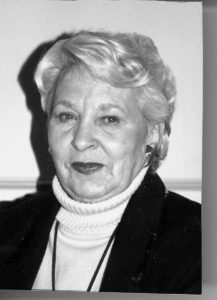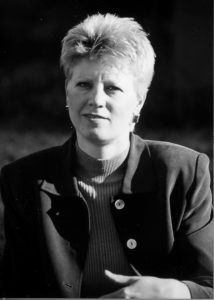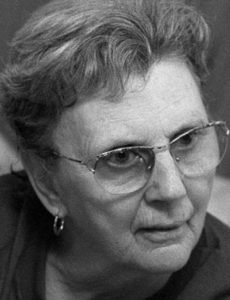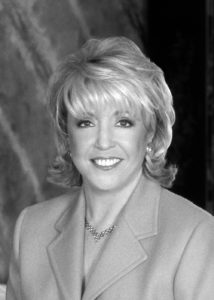

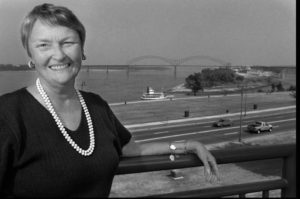
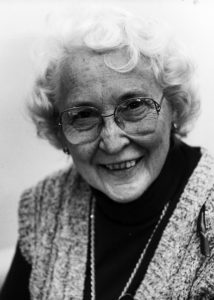
Tandy Gilliland and Patricia Merrill

Tandy Gilliland
Patricia Merrill
Women of Achievement
2002

COURAGE
for a woman who, facing active opposition,
backed an unpopular cause in which she deeply believed:

Tandy Gilliland and Patricia Merrill

Pat Merrill and Tandy Gilliland were already veteran community leaders when they joined energies 12 years ago to fight for a blufftop trail overlooking the Mississippi River. Through 10 years, two lawsuits, broken promises and compromises, their Chickasaw Bluffs Conservancy fought the mayor, a powerful developer and influential blufftop residents.

Their tenacity paid off in August 1999 with the opening of the $2.42 million, 1.1-mile Mississippi Riverbluff Walkway, from Union to Ashburn-Coppock Park. Tandy has been asked if she would have started the fight if she had known it would last for 10 years. “Maybe not,” she says, “but I’m glad that we did it … It proved one thing to me: that grassroots really can win if you just stay with it long enough.”

Pat, a Cincinnati native who moved to Memphis with her five children in 1967, founded the Sea Isle Neighborhood Association and served as chair of Memphis City Beautiful. She was noted for her support of issues from zoning and flood control to tree preservation and interstate sound barriers. Pat was familiar with the bluff trail and was part of a loosely organized group that became concerned when increasing redevelopment downtown began to close parts of the trail. Tandy was an active elder and outreach organizer at Idlewild Presbyterian Church, and working as executive director of the World Lens Project when she read about developer Henry Turley’s plans to build homes atop the bluff.

Tandy’s father, conservationist, environmentalist and Shelby County official Rudolph Jones, had dreamed of a long trail along the Mississippi River that would include the blufftop. Almost without conscious thought, Tandy telephoned Pat, whom she did not know, to become involved in saving the blufftop.

In February 1990, in Tandy’s breakfast room, the Chickasaw Bluffs Conservancy was formed. Tandy was the first president. An alliance of downtown and East Memphis residents, the group was given its name by founding member and 2001 Woman of Achievement Anne Shafer. The conservancy organized hikes and speakers along the blufftop and lobbied for construction of a trail.

Turley, meanwhile, wanted to back out on a promise to pay for construction of a trail if the city allowed him to develop the blufftop land. He decided to sell the lots as homesites and move the trail behind them. Late in 1992, the city council accepted Turley’s idea of “notching” the walkway into the bluff eight feet below the riverfront homes – and Turley was not required to pay for it. The search for state and federal funding took off and designers worked to make the compromise a safe reality. The City Council in February 1995 approved funding – but Mayor Willie Herenton tried to end the project by refusing to sign the construction contract. Then he proposed an alternative route that would wind the walkway BEHIND two riverfront condominium projects and Turley’s South Bluffs.

Pat, conservancy president starting in 1994, reacted: “I think it’s a complete betrayal of the citizens of Memphis. To me, exchanging a magnificent bluffwalk for a peep show and giving command of the Bluff City’s bluff to a few well-placed individuals is akin to selling our birthright for a mess of pottage.” Said Tandy, “We’re not done yet. We’re going to fight as long as we can.”

Then blufftop homeowners sued to stop construction, fearing the walkway would be easy access to their backyards. Some called the conservancy members pushy and old and one threatened to “get out the garden hose and give them a ride down the hill.” Pat responded. “Because this is the Bluff City, the city should have a bluff and the public should be able to enjoy it. We never had anything against those nice people who live in those houses. We just want them to share the view.”

In 1997, Herenton was defeated in state appeals court by the conservancy, joined by the city council. The homeowners’ suit was dismissed in 1998. Now former opponents praise the walkway for making the blufftop into a neighborhood.

Through their courage and persistence, Patricia Merrill and Tandy Gilliland preserved for generations public access to the Bluff City’s grandest view.

Patricia Merrill passed away on September 8, 2019 at the age of 93.

Tandy Gilliland passed away on November 8, 2020.
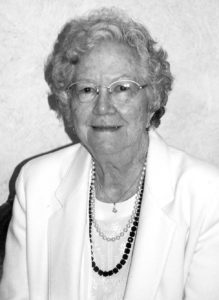
Anne Shafer

Women of Achievement
2001

COURAGE
for a woman who, facing active opposition,
backed an unpopular cause in which she deeply believed:

Anne Whalen Shafer

A native Memphian, Anne Whalen Shafer has generously given energy and time for more than 50 years to improve the quality of life for all inhabitants of Memphis. She has faced anger and ignorance with grace and determination. Anne believes in and works toward the elimination of racism and sexism in families, religion, and society.

In the mid-1960s, Anne was appointed chair of the Memphis City Beautiful Commission, a post she held for three years. She organized a group of women from different ethnic neighborhoods who cleaned up areas plagued with open sewers, filth, and disease. They stood up to traditionalists who wanted to maintain segregation in Memphis. In 1964, the Memphis City Beautiful Commission was integrated with the addition of three African-American members, in part due to the encouragement Anne gave Public Works Commissioner T.E. “Pete” Sisson.

On her first day as the chair of the commission, Anne integrated the office of inspectors by moving two African-American inspectors from the cloakroom into the main office. The elimination of a separate “Negro Division” fit Anne’s sense of values. As it turns out, this created the first integrated office in City Hall. During her tenure, segregation fell by the wayside on every front. She integrated the annual Clean-Up, Fix-Up, Paint-Up parade and the poster art contest, and she worked for a single Miss City Beautiful contest open to all.

Openly working for integration in the 1960s in Memphis required courage and earned her a few enemies who didn’t share her strong sense of what is right, but Anne sought and won the position of Shelby County delegate to the 1965 Tennessee Constitutional Convention that reapportioned the state legislature.

Over the past 50 years, Anne has been active in the League of Women Voters, Church Women United, UNICEF, Mid-South Peace and Justice Center, and the Panel of American Women. She and her compatriots crossed an invisible boundary that imprisoned people who were marginalized by the hue of their skin or their gender or heritage. That boundary was an attitude that kept people in their place. “When the time came for me to step over that line, I had to do it,” she said.

Today, Anne continues to speak up for issues she passionately believes are right. She is one of the founders of the Public Issues Forum, an association whose purpose is to stimulate civil discussion and debate on current issues. They focus on the need for tolerance both locally and internationally.

Always an advocate for the inalienable rights of every human being, Anne Whalen Shafer embodies the essence of courage in a world that does not always accept with grace the diversity of cultures, issues, and beliefs. She stands tall as a role model for courageously and actively living one’s beliefs.


Anne Shafer passed away at age 90 on October 2, 2013.

Helen Adamo

Women of Achievement
2000

COURAGE
for a woman who, facing active opposition,
backed an unpopular cause in which she deeply believed:

Helen Adamo

Although some form of mental illness affects one in five families, the condition is often misunderstood, feared, and hidden from public view. It takes a person of courage to accept the unpopular challenge of being a champion for people who suffer with mental illness. Such a courageous person is Helen Adamo.

For 20 years, Helen has worked to dispel erroneous myths, change public policy, and defend the rights of individuals whose lives have been affected by disorders of the brain. Her business card from the National Alliance for the Mentally Ill of Memphis reads, “Helen Adamo, Advocate.” Behind this simple title lies a diverse, complex combination of hard-fought achievements, gratifying victories, frustrating delays, fierce battles, exhausting hours, and eternal faith. Helen’s goals include removing the stigma attached to mental illness and improving the quality of life for those who often are victimized because of their illness.

“Discovering that a family member has a mental illness is like a death, but the person is still living,” Helen said. “You don’t receive flowers. People don’t come to visit and console you. But you still grieve. And you have to go through each step of the grieving process until you reach acceptance. That’s when you become an advocate.”

Helen has far more than a passing acquaintance with those steps to acceptance. She is the mother of a mentally ill adult son. Twenty-eight years ago when she first faced the heartbreak of mental illness, there were few medications and even fewer services available for families with mentally ill members.

Today, she enthusiastically lists the number of medications available, but laments the delivery of services and the ignorance that persists about the disease. She edits the AMI Advisor, a newsletter for the organization she has served since 1983.

By speaking out in defense of the rights of the mentally ill, Helen draws attention to the plight of these intelligent individuals who suffer and may not know that there is help for them. She is one of the cofounders of the Crisis Intervention Team, specially trained police officers equipped to handle people with brain disorders. This special unit has been in existence for 11 years and has become a model for the rest of the country. The officers volunteer for the training and are now found in every precinct in Memphis 24 hours a day.

Jails are another challenge faced by the mentally ill and a major concern for Helen. She firmly believes that if a third of detainees in jails who are suffering with serious brain disorders were expedited through the system so they could get the help they need, overcrowding in jails would be a moot point. This is neither a popular nor easy proposal, but one she pursues nevertheless. After two years of Helen’s advocacy for those mired in the judicial system, a committee has been formed to review solutions to the problems – a glimmer of hope on the horizon for her.

Helen retired from NAMI-Memphis April 1, 2002, at age 74.

Helen Adamo passed away on September 22, 2021.

Susan Mackenzie

Women of Achievement
1999

COURAGE
for a woman who, facing active opposition,
backed an unpopular cause in which she deeply believed:

Susan Mackenzie

An attorney in private practice for more than 13 years, Susan Mackenzie is an out lesbian who has worked both within the justice system and outside the system as a political activist to change legal and social structures that deny the rights of lesbian and gay citizens.

Susan has merged her legal skills with activism, working for equal rights for women, lesbians, gay men as well as others victimized, deprived and overlooked by society.

Susan is often called on as a spokesperson for a feminist perspective on numerous issues.

She has never shied away from disclosing personal aspects of her life in order to further the political rights of women. She has spoken out as a survivor of child sexual abuse and has never hidden the fact that she is a lesbian.

She is a survivor in all its senses.

Born in Ann Arbor, Michigan, while her dad was in graduate school, she grew up in Huntsville, Alabama. She graduated from Middle Tennessee State University in 1983 with a double major in psychology and criminal justice administration. She earned her law degree from Memphis State University Law School in 1986.

Susan has successfully represented lesbian and gay parents being denied their parental rights because of anti-gay stereotypes. In another focus of her practice, Susan assists gay and lesbian couples in protecting their relationships through wills, powers of attorney and co-parenting agreements – legal documents that are unnecessary for those allowed to marry.

She was a member of the team of attorneys that represented the plaintiffs in the successful challenges to the constitutionality of the Tennessee sodomy statue which criminalized private homosexual activity between consenting adults. This law was declared unconstitutional in 1996.

Susan brings her feminist philosophy to litigation as a Rule 31 certified mediator. She is a former national board member for both the National Organization for Women and the National Lesbian and Gay Law Association.

Susan’s courage is reflected in her daily struggles for equality whether in the courtroom or on the streets. In the face of opposing forces, even those whose anger is disruptive and violent, she is able to maintain her voice of reason.


Susan Mackenzie continues to work as a litigator in Memphis.

Doris Bradshaw

Women of Achievement
1998

COURAGE
for a woman who, facing active opposition,
backed an unpopular cause in which she deeply believed:

Doris Bradshaw

Doris Bradshaw stood up against powerful forces to protect her community.

Doris serves as the executive director of the Defense Depot of Memphis, Tennessee – Concerned Citizens’ Committee which was formed during a PTA meeting in October 1995, to address the pollution the Defense Depot was causing in the black residential community surrounding it. She became known as “troublemaker” when she began researching the issues connecting pollution and cancer which contributed to her grandmother’s death. She discovered scores of chemicals flowed throughout the Depot’s 18 drainage ditches into the surrounding community, which included eight schools.

Doris’ efforts have resulted in many achievements for the community. When health department statistics showed the cancer rate in her community was twice as high as the country as a whole, she challenged plans to “pump and treat” contaminated water beneath the depot because it was insufficient and not scientifically well-founded. She demanded that the Agency for Toxic Substance & Disease Registry perform another health assessment on the community surrounding the Defense Depot. The assessment proved that the one done in 1995 was unscientific. Later, she created and chaired the community board of the Agency for Toxic Substance & Disease Registry. She searched for an outside lab to test samples of the water in Memphis and identify contaminants.

Doris is also a community representative for the Community Tribal Subcommittee of the Board of Scientific Counselors, one of the nine people chosen from a field of 75 applicants.

In order to keep people informed about environmental racism, Doris travels extensively and has become a familiar figure in this movement. She has been appointed to and chairs the Tennessee African-American Environmental Justice Action Network and she is a member of the Tennessee Minority Health Coalition.

A member of the National Organization for Women, she conducted a workshop at their 1997 annual conference titled, “A River of Pollution Runs Through It: Women Fighting Environmental Racism in the South.”


Doris Bradshaw continues to combat environmental justice in her own backyard (literally). Her daughter has also joined the fight.

Novella Smith-Arnold

Women of Achievement
1997

COURAGE
for a woman who, facing active opposition,
backed an unpopular cause in which she deeply believed:

Novella Smith-Arnold

For more than 18 years, Novella Smith-Arnold has been dedicated to a single mission: chaplain for the men and women in the Shelby County jail. In her own words, Novella works with those whom no one else wants: the criminals, crooks and creeps – the disenfranchised and throwaways. But she believes that everyone deserves the love of another, and it is her calling to provide that love.

As director of the Calvary Episcopal Church Criminal Justice Ministry, called “We Care, Inc./Kids Care,” Novella ministers to the forgotten of society.

Many were outraged when in 1989, then-Sheriff Jack Owens declared Novella and her work with Shelby County inmates to be “a security risk,” and she was banned from ministering in the jail. But Novella stood her ground and, backed by a petition from the prisoners and the public support of many, she was able to return to her ministry.

And then a new affliction began sweeping the jail. The outbreak of AIDS was no less tragic among those in jail, and many times much worse. Novella found that prisoners with AIDS were often isolated, harassed and abused. Just as AIDS began to turn into epidemic proportions, Novella was again banned from her work in the jails. Today, she continues to minister to inmates even though she is not allowed in the jail.

Novella now has an even more personal reason to continue her work: Her daughter, adopted at age 13, is now fighting full-blown AIDS at age 32.

God said “feed my sheep” and Novella continues to follow His direction no matter what the odds. Since she began her career in broadcasting, Novella never dreamed she would end up ministering to criminals. But she believes that wherever God calls, we must go.

Novella’s work takes courage, with a generous helping of caring to go among the prisoners, and an ample amount of bravery to face up to the uncaring who would like to send her away.

Novella is outreach ministry chaplain at Calvary Episcopal Church.


Novella Smith-Arnold is currently the prison chaplain at the Shelby County Jail.

Frances Goodman McMahon

Women of Achievement
1996

COURAGE
for a woman who, facing active opposition,
backed an unpopular cause in which she deeply believed:

Frances Goodman McMahon

A nurse at Arlington Developmental Center, Frances McMahon saw mentally disabled people being abused and neglected. Told to ignore abuses, she got angry, got involved and got things changed. It started with her deep concern over a 4-year-old boy named Seth. For two years he was kept locked in a room by himself with no mat and no toys. This was how development technicians were handling the problems of the self-abusive child at Arlington.

Nurses at Arlington were told not to report abuses. Abuses noted on medical reports were either erased or changed. During Frances’ efforts to help Seth, other nurses started talking about patient abuses, inept medical care and poor management at the facility. When supervisors refused to address the problems, Frances and the nurses went outside the facility for help – first to State Representative David Shirley. He took them to then-Commissioner of Mental Health and Retardation, Eric Taylor, who warned them not to get involved. Next they went to Governor Ned McWherter, who also told them not to pursue the issue.

Finally, they went to then-U.S. Attorney for West Tennessee, Hickman Ewing. He turned the matter over to the FBI and the Justice Department and finally an investigation was launched. Frances made daily reports from Arlington. Suspicious that she was helping the investigation, her supervisors constantly scrutinized her work and made her time on duty as difficult as possible.

The investigation led to the Justice Department filing suit and in 1993 U.S. District Judge Jon McCalla found that the state had violated the constitutional rights of the Arlington patients. The state, the Justice Department and McCalla eventually agreed on a plan to improve care at Arlington.

Later, McWherter said that the investigation was his first knowledge of abuse at Arlington. He remembered that he had spoken with some “disgruntled employees” who complained about working conditions, but said that he was never told by an employee about any clients being abused. Likewise, former Commissioner Taylor claimed that there were no reports of falsified medical charts and no outcry from staff that people were being mistreated, and that furthermore, if there was any wrong doing reported, it was immediately investigated and resolved.

Today Frances McMahon is retired and Arlington Developmental Center is under new management. The center remains under constant scrutiny by a court-appointed monitor to show that patients are receiving the care they deserve. “Don’t underestimate the role she played,” say Justice Department officials of Frances.

Frances McMahon ignored repeated warnings not to get involved in the problem. She faced active opposition from her supervisors, the Commissioner of Mental Health and the governor. Despite efforts to stop her, our 1996 Woman of Courage continued until the rights of patients were finally recognized and steps were underway to improve the lives of the mentally disabled residents.

Carol Prentiss

Women of Achievement
2004

DETERMINATION
for a woman who solved a glaring problem despite
widespread inertia, apathy or ignorance around her:

Carol Prentiss

Carol Prentiss is a leading philanthropist with an equal knack for raising funds from others. With a record-setting history of support for local causes, it is her long-lasting determination to raise awareness of the too-often hidden tragedy of child sexual abuse that reverberates the most.

Carol, like her husband Jim Prentiss, long has given generously of her personal wealth. Carol also has worked tirelessly to raise money for such important not-for-profits in our city as the Memphis Zoo, the YWCA’s Spouse Abuse Shelter, Brooks Museum and the Memphis Child Advocacy Center. Carol considers the Child Advocacy Center her “special cause.”

Her heartfelt conviction that the abuse of children should be fought openly and prevented by every means possible led to efforts that will have profound effects for decades to come.

Carol rose from modest beginnings. After working for Shoney’s South for 22 years she found herself the highest-ranking woman in the company as a division director overseeing 26 restaurants in the Carolinas. After her move to Memphis and marriage to Shoney’s chief executive, Jim, in 1986, she dove into charity work with an equal amount of energy. Soon, the two of them were a dynamic duo in fundraising circles.

When Carol discovered the newly formed Child Advocacy Center in 1990, she found a cause to call home. She stepped in to help where needed and has not slowed yet.

The CAC’s founding executive director, Nancy Chandler, reports Carol “came to the rescue of the struggling-to-be-born” center. Chandler said Carol immediately recognized the overwhelming need and provided voluntary leadership that has grown and matured over time.

Current executive director Nancy Williams credits Carol for shepherding her through her first few years on the job. “Carol has never moved from the role of advocate when she talks with people in our community about sexually abused children – not a popular conversation topic,” Nancy says. She adds that Carol “is a champion of children … what matters most to Carol – and what she lives out – is that she makes a difference in the life of one child.”

A decade and a half after joining the cause, Carol has made a difference in the life of countless children. She worked to bring about a successful opening of the center in the former Four Flames Building in 1992, and the construction of a new wing in 2000. She has supported the development of a multidisciplinary team, which reviews more than 2,000 reports of abuse annually. Every year she chairs a lavish gala event that raised $35,000 its first year and last year netted more than $200,000 for the CAC. She speaks tirelessly on behalf of the center and has made dozens of face-to-face requests for major donations.

Apathy, ignorance, inertia – all have vanished in the wake of this one-woman embodiment of determination.


Carol Prentiss currently serves on the CAC’s Board Emeritus as a community volunteer.

JoeAnn Ballard

Women of Achievement
2002

DETERMINATION
for a woman who solved a glaring problem despite
widespread inertia, apathy or ignorance around her:

JoeAnn Ballard

When JoeAnn Ballard was a little girl in Mississippi, her father read her the biography of Florence Nightingale, a young English woman who, against her family’s wishes, became a nurse to help others. Fascinated by this story, JoeAnn decided that her mission in life was to serve the poor. Decades later she continues to fulfill that mission through her work as executive director of the Neighborhood Christian Centers, which started in 1978 with one small location. The Neighborhood Christian Centers now consist of five local centers plus affiliates in other states. More than 15,000 people are helped each year.

JoeAnn was born in Mississippi into a poverty-stricken family. When she was an infant, she and two siblings were left with their great aunt and uncle, who provided a home filled with love. That home was opened to many foster children, an example that JoeAnn would follow. As JoeAnn grew up, she remained determined to battle poverty; she just wasn’t sure how. During an assembly program in her first year of college, she heard a couple talk about Christ and knew that she had to become a Christian. She applied to Nazarene Bible College in West Virginia. Upon her arrival JoeAnn found that she was the only woman in a large group of men, but was determined to stick it out. Upon graduation she came to Memphis to reopen a church. That fall a child in Sunday school came to her and said she needed a sweater. JoeAnn bought the sweater and began her mission with the poor.

The following year she met and married Monroe Ballard. Over the past 30 years, they have been foster parents to more than 75 children while raising three of their own.

The Neighborhood Christian Centers started with $15,000 from Second Presbyterian Church. At first, JoeAnn was the only employee. Under her leadership, the center became the largest Christian social service agency in the state. “I don’t know who has done more than JoeAnn Ballard for the poorest of the poor,” said Larry Lloyd, president of the Hope Christian Community Foundation. “She is a deeply faithful woman.”

The center’s services include tutoring, college assistance, adult education, job training, legal and financial counseling, clothing closets and food distribution. JoeAnn tries to make sure everyone who comes in contact with the ministry is served one at a time, accomplished only with the faithful help of 40 paid staff and many volunteers. The center’s budget is funded through churches, foundations and individuals. There is no government assistance. JoeAnn says, “Our aim is not to eradicate poverty. Our aim is to help people who are poor and to spread the gospel.” How has JoeAnn made such an impact? She says, “We try to feel a person’s pain and meet that person’s need.”

JoeAnn Ballard’s determination rescues children and families from the damaging cycle of poverty. JoeAnn Ballard’s determination saves lives.


JoeAnn Ballard’s daughter Ephie took control over the Neighborhood Christian Centers in 2008.

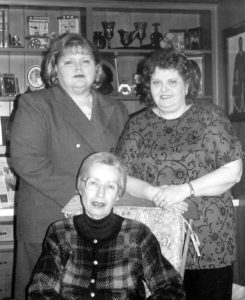
Debbie Norton, Jalena Bowling and Denny Glad

Debbie Norton (left), Jalena Bowling and (seated) Denny Glad (right).
Women of Achievement
2001

DETERMINATION
for a woman who solved a glaring problem despite
widespread inertia, apathy or ignorance around her:

Debbie Norton, Jalena Bowling and Denny Glad

What if you didn’t know your birthmother? Your birthfather? Your birthsiblings? For some of us, that might seem to be an option we might momentarily enjoy. But, quickly we would realize that it is these very people who make us the unique and special individuals we are. For millions of adoptees this lack of knowledge is an emotional struggle and a physical challenge. Jalena Bowling, Denny Glad and Debbie Norton understand this feeling and have taken giant steps to help.

These three women epitomize determination. They are adult adoption activists who have achieved tremendous successes in connecting parents and their adopted children. Through a long and difficult struggle with the Tennessee State Legislature and numerous court delays, Bowling, Glad and Norton have fought for the right to know. Now, because of their efforts, thousands of birth records have been unsealed and hundreds of families have been reunited.

As Debbie Norton explained, “This is a civil-rights issue. What is more basic than the right to know who you are and where you come from? What most people take for granted, we have had to fight for.”

The final bill allowing this new freedom of information also protects those parents and adult children who truly do not wish to be contacted. By instituting a “contact veto” provision, which includes both civil and criminal penalties, this special bill has become a model for other states seeking to work through this difficult and emotional issue. Through their determination, Jalena Bowling, Denny Glad and Debbie Norton have made a difference in countless lives.


Denny Glad passed away on May 12, 2008 at age 70.