
Judith Schwarz Scharff

Women of Achievement
1992

HERITAGE
for a woman whose achievements still enrich our lives:

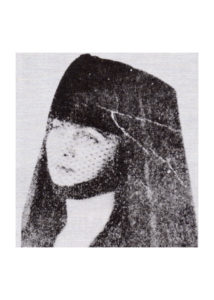
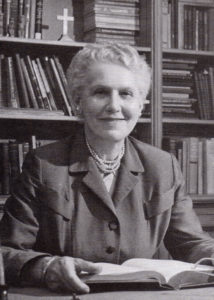
Judith Schwarz Scharff

Judith Schwarz Scharff was a mother of four sons whose energy and dynamism established Memphis Planned Parenthood as a major reproductive health clinic in the Mid-South. Though she died of cancer at age 40, her impact lives on.

Born in New Orleans, Judith attended Connecticut College for Women briefly and married at age 17. Her first child was born two years later and by 1961 there were four. Her husband’s work brought her to Memphis in 1956 where she plunged into music and art groups, political campaigns and women’s causes with enthusiasm.

She was volunteering at a Memphis school when she encountered five teenage girls who were pregnant and first heard about an effort to establish a family planning clinic in Memphis. As she had done with other causes, she rapidly turned her concern into action and soon became the first board president of the newly revived Memphis Association for Planned Parenthood (MAPP) in 1966.

At that time family planning help for low-income groups was not available in Memphis except for a group of women voluntarily participating in a research project in City of Memphis hospitals. At the early meetings of the first board, Judith’s enthusiasm for the agency was unparalleled. Her faithful determination ensured Planned Parenthood’s success. She chaired many committees and often single-handedly accomplished their charges. She not only served on the board and committees, gave and raised money, but also worked clinics whenever asked.

She served on the national and southeast region information and education committees and served on the Memphis agency board for nine years. Judith was determined that every child would be a wanted child in this city. “The atmosphere of MAPP in this era was charged by Judith’s constant presence,” said former board president Ed Kaplan. “She was a magnet. She made us all brave because we were afraid to be less courageous than she.”

In 1975, after devoting many volunteer hours to Planned Parenthood, Judith took the job of director of information and education and continued until her death on May 10, 1976. The board established the Judith S. Scharff Memorial Education Fund and uses the proceeds to maintain a library for Planned Parenthood.

Judith had many interests beyond Planned Parenthood. She was administrative director of Transition Center, Inc., a board member of Citizens to Preserve Overton Park, a former member of the board of governors of United Way of Greater Memphis, and a member of United Way’s health and welfare planning council. She was secretary of the board of trustees of the Memphis Academy of Arts, a docent for Memphis Brooks Museum of Art, and a board member of the Memphis Orchestral Society.

Those who can remember or even imagine a time when birth control was unavailable to most women in Memphis, and when reproductive health care was a luxury for the wealthy only, will agree that Judith Scharff has left a rich heritage — a heritage that continues to enrich our lives today.
Lena Angevine Warner

Women of Achievement
1991

HERITAGE
for a woman whose achievements still enrich our lives:

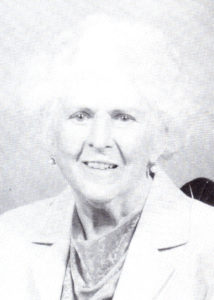
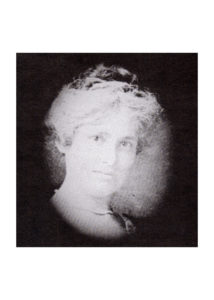
Lena Angevine Warner

During one night’s ordeal in Cuba, she delivered a baby, performed a circumcision, a tonsillectomy and an amputation (all with the same kitchen knife), and passed her own kidney stones. She was Lena Angevine Warner, a woman whose story demands to be told.

Lena Angevine was born in Grenada, Mississippi, in 1869, the daughter of a prominent Mississippi couple. In 1877 a yellow fever epidemic swept through the area, killing everyone in the Angevine household except eight-year-old Lena. Her grandmother enrolled her in a boarding school in Memphis, where her interest in health care was nurtured by a teacher who had been a friend of Florence Nightingale.

Over her grandmother’s protests, Lena entered the first nursing school in Memphis in 1889. According to The New York Times and the American Journal of Nursing, she was the first graduate nurse in Tennessee and, probably, in the South. She took a post-graduate course at Cook County Hospital in Chicago and was married briefly to E.C. Warner. In 1897 she founded the Tennessee College of Medicine and Nursing.

When the Spanish-American War broke out in 1898, President McKinley called for volunteer nurses. Lena led a team of Memphis nurses to Cuba. “Every kind of epidemic — cholera, malaria, smallpox, yellow fever and bubonic plague — gripped Cuba,” she said later. Her outstanding nursing and organizational skills resulted in being named chief executive nurse of the island. That meant she became the first and the only woman officer in the U.S. Army.

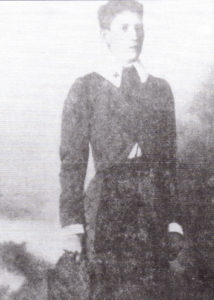
Besides her nursing talents, Lena was the designer of the first official nurse’s uniform, a Zouave jacket in blue over a waistshirt of white linen and a long navy skirt.

Because she had been exposed to yellow fever as a child, she was considered to be (erroneously, as it turned out) immune to the disease. After the war was over she was invited back to Cuba to be the nurse in charge of yellow fever experiments. Working with Dr. Walter Reed and a distinguished medical staff, Lena was there when experiments proved that the female stegomyia mosquito carried the disease. Several of the medical team, including Lena, became ill with yellow fever during the experiments.

Returning to Memphis, she began a long career in public health and community service. She was a founder of the Tennessee Nurses Association and the Tennessee Health Association. She organized Red Cross chapters and served as the state chairperson for the Red Cross Nursing Department from 1910 to 1932.

Lena moved to Knoxville in 1916 and fought epidemics of cholera and influenza throughout Appalachia. She was a tireless fighter for better sanitation and public health. She published hundreds of books and pamphlets on health concerns as the director of rural health and sanitation for the University of Tennessee Agricultural Extension Service from 1916 until her retirement in 1946 at age 79.

During this time, an incident occurred which characterizes Lena’s concern for all living creatures. While leaving a Home Demonstration Club meeting one day, Lena saw a man beating two horses that were struggling to pull a heavy load. She stationed herself in front of the animals until the cursing man removed part of the load.

Lena Angevine Warner died in 1948. She lived a life of “firsts” yet few people today know her name. Although she was profiled in The New York Times and was a colleague of Dr. Walter Reed, Lena was more concerned about being useful than being famous. At her death she was entitled to be buried at Arlington National Cemetery, a place reserved for heroes. Following the custom of her life, she was brought home to Memphis to be buried at Elmwood Cemetery near her family.

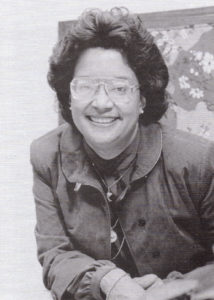
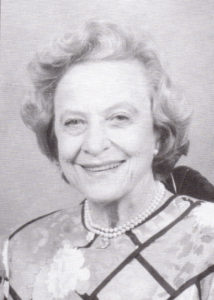
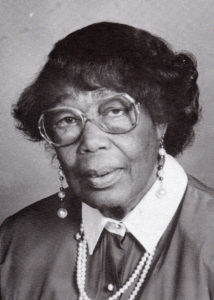
Mary Treadwell, Georgia Harry and Patricia Walker Shaw

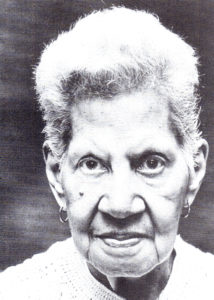
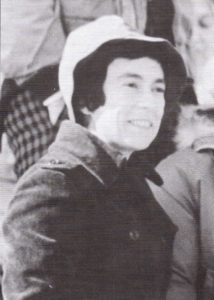
Mary Treadwell
Georgia Harry
Patricia Walker Shaw
Women of Achievement
1989

HERITAGE
for a woman whose achievements still enrich our lives:

Mary Treadwell, Georgia Harry and Patricia Walker Shaw

To the casual observer the similarities in the three women honored this year as recipients of the Heritage award may seem superficial. But Patricia Walker Shaw, Mary Harry Treadwell and Georgia Harry were alike in many different ways.

First, they were all three insurance businesswomen. Mary Harry Treadwell and Georgia Harry were the first women in the world to establish and successfully manage an insurance agency. Two generations later, insurance was still generally considered a man’s world when Pat Walker Shaw started at the bottom to learn the family business. In 1983, she became the first woman to head a major U.S. life insurance company.

As young women, Pat, Mary and Georgia expected their lives to follow very traditional patterns. All three married. Pat and Mary had children. Pat attended Oakwood School and went to Fisk, where she majored in business administration and became a social worker. Mary and Georgia attended Miss Higbee’s School and made their debuts in Memphis where they expected to live comfortable and traditional lives. But Mary’s husband died, and Georgia’s marriage failed.

After Timmons Treadwell’s death in 1909, Mary and Georgia continued to manage the family business, a cotton factoring and wholesale grocery establishment. But their banker pointed out that the popularity of the automobile would create a demand for insurance. So the two young women who had never ever written a check got a rate manual, read it and began writing insurance through Chubb and Son and Fidelity Casualty Company.

At first, people gave them business because they felt sorry for them — all alone, trying to educate two young boys — but their customers soon developed respect for their frugality and business acumen. Treadwell & Harry wrote the surety bond on the Harahan Bridge, guaranteeing that the work would be completed on schedule. As their business flourished, they were able to hire male secretaries and in 1920, after writing insurance for almost everyone else of note in Memphis, Mary wrote a policy on her own automobile. It was a good idea. A police officer observed at the time that Mary always had her foot on the gas, never on the brake.

After World War I, George and Tim came into the business, but their mother and aunt remained active until 1935. Mrs. Treadwell died in 1946. Mary Harry, the quiet intellectual, lived to be 92. In 1971, the agency they founded was sold to Cook Industries, but the family regained control in 1983.

The same year saw Pat Walker Shaw’s untimely death, a tragedy in every sense of the word. She was head of one of the largest black-owned businesses in the South and had risen to national prominence as the first woman president of the National Insurance Association. Her accomplishments were remarkable: she held memberships with nearly 25 organizations, boards and commissions, including two government appointments. She was the first woman ever to serve on the Memphis Light Gas & Water Board.

Because of the segregated schools of Memphis, the Walkers sent their young daughter to a Quaker boarding school in Poughkeepsie, New York. Pat graduated from Fisk University and moved to Chicago, then later to Nashville where she was a social worker. In 1966 she, her husband Harold and their young son returned to Memphis where Pat took an entry-level position at Universal Life, an insurance company founded by her grandfather in 1923. The facts belie the popular notion that she “inherited” her job at the top. She worked in the data processing and the accounting departments, and she developed new marketing strategies for the company.

When the board of directors chose Pat to be the CEO in 1983, A. Maceo Walker said in an interview, “Girls can do the job just as good.”

Pat Shaw’s unique leadership abilities were recognized and appreciated by all Memphians; however, let us not forget she was a powerful black woman. Her deepest loyalties were to the black community. She said, “Most of the people we serve, the people who are our major customers, are grassroots folk who make $15,000 and below. We are, first of all, responsible to them.”

As we hold in our memories these three extraordinary women who mastered the insurance business and left their marks on this community, let us listen to the words of Pat Walker Shaw: “Women have to accomplish more; we have to prove ourselves over and over.’

Mattie Sengstacke

Women of Achievement
1994

STEADFASTNESS
for a woman with a lifetime of achievement:

Mattie Sengstacke

Long before anybody was talking about “networking” Mattie Sengstacke was doing it. No one in Memphis during the past three decades has been more effective in bringing people of different races, classes, religions and interests together to work for good causes.

A native of Little Rock, she grew up and was educated in Chicago, then moved to Memphis in the early 1960s with her newspaper editor husband and their children. Here, Mattie immediately joined the newly formed Saturday Lunch Club, a group of black and white women who lunched together monthly to monitor compliance with the desegregation mandates of the new U.S. Civil Rights Act. As Mattie has said, “That’s when it all started.”

She soon became a fixture in the struggle for local civic progress — a catalyst who could make things happen.

In the 1960s Mattie spearheaded establishment of the Red Balloon Players, an integrated traveling theater group for children. She started a summer “dew-in” for underprivileged girls. She served on the Front Street Theatre board, and was chairperson of Friends of Channel 10. In 1968 she supported the striking sanitation workers by holding “house-rent parties” and signing up marchers for demonstrations.

In the 1970s, as a charter member and president of Memphis Council for International Visitors, Mattie scheduled activities for foreign visitors to the city. She also founded an emergency fund to help stranded student refugees. She was a charter member of MIFA and organized the W.C. Handy Centennial Celebration in 1973. She worked for equal rights for women as a founding member of the Volunteer Women’s Roundtable, and she joined in the efforts of women seeking (to no avail) to start a women’s channel on Memphis cable TV.

In the 1980s Mattie helped organize United Music Heritage to honor unrecognized pioneers of Memphis music. She was program coordinator for the monthly ecumenical breakfasts of Congregations United, a project of the National Council of Christians and Jews. She also worked with Family Service, Girl Scouts, the Heart Fund, U.S.O., Girls Club, Habitat for Humanity and United Way.

In 1994 Mattie single-handedly organized a recognition ceremony at the National Civil Rights Museum to pay tribute to “Women Who Made A Difference in the ‘60s in Memphis.” Sure, Mattie Sengstacke is a woman who has made a difference in Memphis. As moving spirit, guardian angel, guiding genius or president facilitator for a succession of worthy projects through the years, she is a model of steadfastness.

Selma Lewis

Women of Achievement
1993

STEADFASTNESS
for a woman with a lifetime of achievement:

Selma Lewis

This quiet, modest woman has spent her adult years making life better for Memphis and Memphians, along the way affecting the entire nation. Championing the causes of better race relations, better social services and the arts, Selma Lewis has led with grace, sureness and compassion.

Always concerned with the quality of life for children, in 1964 Selma and her friend Myra Dreifus gathered 10 people together to discuss the development of a fund that would be used to purchase school lunches for children who would otherwise go hungry. Working with Vista Volunteers, Selma surveyed Memphians for their support. Their research found that thousands of children were unable to purchase a lunch. Armed with patience and determination, Selma and other volunteers were able to successfully overcome a lengthy legal battle that allowed the Memphis Board of Education to set up the Fund for Needy School Children. So successful was the undertaking that the federal government used it as a basis for today’s National School Lunch Program.

Interested in both the spirit and body of the child, Selma also founded the School Concerts Program, which brought the Memphis Symphony into the public schools.

In 1962 she became the first female president of the Jewish Family Service, an organization that provides social services for the Jewish community. Her growing concern for the homeless led her to champion the Memphis Coalition for the Homeless in 1977. The next year she went on to co-found the Mental Health Society of Memphis and Shelby County. During her 10 years on the board, Selma organized the Community Family Conference and was co-editor of the “Directory of Mental Health Services of Memphis and Shelby County.”

While working to improve her community, Selma also worked to improve herself. Having earned a bachelor’s degree from Vanderbilt in 1942, she returned to school at the age of 50 to obtain a PhD in American history. With Marjean Kremer, she co-authored “Historic Black Memphians” and “The Angel of Beale Street: A Biography of Julia Ann Hooks.” Currently she is at work on a “History of the Memphis Jewish Community, 1840s – 1960s.”

Independently nominated for this award by several groups as well as individuals, each nomination speaks of Selma’s modesty and willingness to give others credit. Selma Lewis’ steadfastness in serving Memphis, in helping those in need and in recording the history of our community truly makes her a “woman of achievement.”

Alberta Gaines

Women of Achievement
1992

STEADFASTNESS
for a woman with a lifetime of achievement:

Alberta Gaines

Alberta Gaines has dedicated her life to improving the lies of people across Shelby County. As a young woman from Port Royal, Tennessee, she first took her UT-Knoxville B.S. degree in home economics into Tipton, White and Hardin public schools as a teacher. Eventually she signed on with the Agricultural Extension Service and came to Shelby County as an extension home economist.

That easily was one of Shelby County’s luckiest days.

From teaching young people how to grow their own food in the Youth Service Garden Project to protecting consumers through her work for the Better Business Bureau, sewing clothes for needy children and sharing her expertise with the Mid-South Fair, 4-H and MIFA — Alberta Gaines has been a one-woman resource center for numerous organizations.

For 37 years she has worked through programs at Emmanuel Episcopal Church and other community groups to improve the lives of children and poor people. She has served on the Youth Service in Memphis board of directors since January 1967 and was voted a life member several years ago to ensure she could not rotate off! She also has been treasurer of St. Augustine’s Guild, an auxiliary group to Youth Service. Alberta has been active in Church Women United, American Red Cross, Northside Christian Center, Memphis Day Shelter and the Better Business Bureau’s fabric panel and general board.

Alberta retired in 1983 after 29 years with the Extension Service — but “retired” to Alberta means she has more time for community projects. She soon followed her curiosity to Habitat for Humanity. When she found the project had no paid staff, she kept the books, took in monthly payments, answered telephones and presented slide-show lectures about Habitat’s program of building homes through donations for low-income families. She became active on Habitat’s national board while also heading the local screening committee interviewing many of the hundreds of applicant families each year.

She is truly steadfast in her commitment to making her corner of the world a better place to live. If, as Queen Mother Elizabeth of the United Kingdom once said, service is the rent we pay for our space here on earth, Alberta Gaines has paid her mortgage for several lifetimes.

Ellen Correll

Women of Achievement
1991

STEADFASTNESS
for a woman with a lifetime of achievement:

Ellen Correll

Now in her nineties, Ellen Correll has spent a lifetime working quietly for inter-racial and ecumenical harmony.

Born and raised in Memphis, she graduated Phi Beta Kappa from the University of Wisconsin in 1922. She spent the next two years traveling in Europe and working in New York. She then returned to Memphis to care for her mother. She began work for St. Mary’s Episcopal Cathedral and stayed for over 50 years, becoming director of religious education.

In the early ‘50s, Ellen served with A. Maceo Walker on the Tennessee Civil Rights Commission, which was set up on President Eisenhower’s order. The Commission was very unpopular in the white community and she received lots of hate mail. She promptly threw each letter away and, completely undaunted, she joined Memphis Public Affairs Forum, a group that met at the YWCA to promote racial harmony.

In the early ‘60s, Ellen was instrumental in organizing a series of luncheon meetings at which black and white women met to discuss community problems under the auspices of Church Women United. She also was part of a group of women and men, black and white, who met at the Sarah Brown YWCA to keep communication open between the races.

Ellen was active for more than 50 years in the American Association of University Women. She served as president of Zonta International and helped found the local and state chapters of Church Women United. Her quiet dedication to inter-racial harmony was recognized when the Links named her one of their five white women of the year. She was named the first “Valiant Woman” by the state unit of Church Women United. On her 90th birthday, the Women of the Church at St. Mary’s Cathedral set up a scholarship fund in her name.

Ellen Correll has quietly, graciously and lovingly served her church family, her earthly family, friends, students and our community at large. Hers is truly a lifetime of achievement.

Ellen died on December 12, 1992 at age 93.

Mertie Buckman

Women of Achievement
1990

STEADFASTNESS
for a woman with a lifetime of achievement:

Mertie Buckman

Mertie Buckman has used her social, business and personal resources consistently for nearly 50 years to make our community more responsible to human rights and to social issues affecting people from all walks of life, regardless of race, religion or ethnic cultures.

From sewing clothes for needy children to spearheading creation of facilities like the MWCA’s Raleigh Branch, her work aimed at breaking down the barriers that separate people. A woman with a college degree when very few women achieved that goal, she taught in three states before coming to Memphis where she dove headline into civic work. She campaigned for water fluoridation, was president of the YWCA board of directors in 1950 and again in 1970, and a state and local officer of Church Women United.

Mertie led the successful effort in 1954 to start a public library in Raleigh. In 1972 she started a YWCA center at Raleigh Presbyterian Church, where she serves as an elder. She was a working board member for the Transitional Center for Women from 1973 until it closed. The Center helped women start a new life after incarceration.

Today Mertie Buckman is 85 and still diving headlong into issues and civic work that matter.

She is an honorary trustee at Rhodes College, a trustee at Christian Brothers College and on the advisor’s council at St. Mary’s Episcopal School. She is membership chair for Church Women United and a member of the YWCA Advisory Board. In addition to her obvious leadership qualities, her philanthropic contributions reach beyond the scope of her immediate community and probably never will be completely known.

Mertie has preserved and steadfastly stood by her principles. She has never wavered from her ideals and continues to strive for her dream of a better, fairer world for us all.

In 1923 Mertie was depicted in a marble sculpture call “Essence of Mertie” at Buckman Hall at Christian Brothers University, a rare honor for a Memphis woman.

Althea Price

Women of Achievement
1989

STEADFASTNESS
for a woman with a lifetime of achievement:

Althea Price

When Althea Banks Price arrived in Memphis in 1941 she was the young wife of a new dean at LeMoyne College and the mother of a four-year-old son. She hated leaving Tuskegee Institute’s cultural environment but she quickly settled into a different life and began pursuing the college degree that her working class family had been unable to afford.

After two years in the Bluff City her husband, Hollis Freeman Price, became the first black president of LeMoyne College. The young mother, “First Lady,” and teacher had many responsibilities. Until the passage of public accommodations legislation, no restaurants or hotels would accommodate integrated groups visiting the college so Althea served as their hostess in Memphis.

She cared for her parents until their deaths, earned her Master’s degree in guidance at Memphis State University and returned to Booker T. Washington High School to guide hundreds of students to outstanding educational opportunities all over the nation.

She joined the graduate chapter of Delta Sigma Theta Sorority and the Memphis Chapter of Links, which along with her membership in Second Congregational Church of Christ provided her with many opportunities for community service. She served on the Better Schools Committee, Memphis Volunteers for Youth Counseling, St. Peters Home, and worked in inter-racial and interdenominational groups. Often she and Dr. Price were the only blacks at local gatherings. She also supported the NAACP, the Memphis Urban League and the YWCA, to name a few.

Althea has endured the humiliation and spiritual erosion of segregation, the premature separation from her only child so that he could be educated outside a segregated system, and lived the life of a public “Super Woman” long before that term was born. She struggled through the conflict and confrontations of the ‘60s and now, despite declining health, receives a steady stream of visitors from all walks of life.

We honor Althea Banks Price for her steadfastness, which changed the lives of those individuals with whom she came in contact, and the city in which she has lived.

Audrey May and Vickie Scarborough

Women of Achievement
1993

VISION
for a woman whose sensitivity to women’s needs
led her to tremendous achievements for women:

Audrey May and Vickie Scarborough

Audrey May and Vickie Scarborough opened Memphis’ first feminist book store in September 1990 — but their vision has always been that it would be much more than a place to browse and buy books. May, the social worker, and Scarborough, the research chemist, named their enterprise “Meristem.” That literally means the cells of a plant that carry its memory and enable it to regenerate.

The name symbolizes the ability of women to “remember who we are and pass on information from generation to generation, to grow and flourish,” Audrey says. Vickie adds, “There’s a whole women’s culture out there that most mainstream, white, male society doesn’t know or put much value on. We want to make that available here.”

Meristem, in the redeveloping Cooper-Young neighborhood in Midtown, is a place where women and their friends can go for information, entertainment, socializing and networking. “We want to be inclusive, multi-cultural and to reach out to men, women, gays, lesbians, families, the ecology movement and others,” the owners explain. “That’s why our tag line is ‘Books and More for Women and Their Friends.’”

In addition to an inventory of books on women’s history, feminist theory, parenting, sex, body imaging — plus “non-sexist, non-racist, non-homophobic” children’s books and more — they offer an outlet for women’s crafts, jewelry and art.

In its two years, Meristem has become a place where women artists and authors display their talents. It is a gathering place for local women writers, for women planning National Women’s History Month events, for book discussions and music.

A one nominator said, “Audrey and Vickie have not only begun to achieve their vision, but are also nurturing the visions of other women.”