DETERMINATION
for a woman who solved a glaring problem despite
widespread inertia, apathy or ignorance around her:
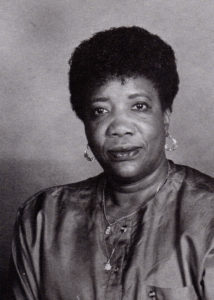
Willie Pearl Butler
When she moved to Memphis as a young woman, Willie Pearl Butler worked hard to support herself and her family. She was employed successively by the Chisca Hotel, Loeb’s Laundry, the Old White Rose Laundry, Memphis Steam Cleaners and Kay’s Nursing Home. But in 1968 her young son was in a serious accident and required her constant attention. It was then that she was forced to seek help from the Welfare Department.
An assertive woman, she was well treated but she was shocked at the poor treatment of others that she witnessed. Willie Pearl Butler decided that something must be done. She questioned the welfare workers, researched the laws, and then made an appointment with the director of the Welfare Department. She and nine other women organized the local chapter of the Welfare Rights Organization. She went to a first meeting alone to state their grievances concerning the attitude of some social workers toward poor women.
While continuing her work on welfare rights, she helped organize the Resident Council Association of Public Housing and the LeMoyne Gardens Tenants Association. She also got involved in establishing Memphis Area Legal Services and became the first non-lawyer to chair that board. As time passed and her reputation grew, she found herself more often involved in meetings than in confrontations and demonstrations.
Through the years, when the rights of the poor in our community have been violated, Willie Pearl was on the front lines to see that justice was done.
With unfailing determination, she has struggled to achieve for poor people the respect that all people deserve.
Willie Pearl later worked for the Shelby County Sheriff’s Department.
HERITAGE
for a woman whose achievements still enrich our lives:
Ida B. Wells and Myra F. Dreifus
This year we honor posthumously two women who achievements still enrich our lives. Although the details of their lives appear dissimilar, they complement one another.
One was a Southerner who moved north to complete her life; the other was a Northerner who moved south. One was black, the other white. One was born in the 19th century, the other in the 20th. One was born a slave, the other free. One was Christian, the other Jewish. One had finished her work in Memphis before the other was even born — and although their lives overlapped for some 27 years in these United States, they never knew each other personally.
And yet they are strangely alike. One was repeatedly described as “militant,” “courageous,” “determined,” “impassioned,” and “aggressive” while the other was referred to as a “damn busybody,” a “fighter,” and as the “conscious of Memphis.” Each did what she could to address the problems of her day — and Memphis will never be the same again because of each of them.
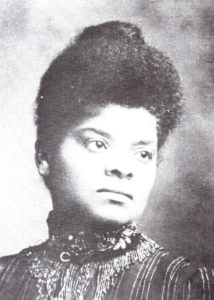
Ida B. Wells was born in 1862, six months before the signing of the Emancipation Proclamation, to slave parents in Holly Springs, Mississippi. She was educated first at Rust College where her carpenter father was selected to the first Board of Trustees, and later at Fisk University. She was orphaned by Yellow Fever at 16, along with six younger brothers and sisters whom she raised.
Ida began her career as a teach in a one-room school in rural Mississippi; continued in the rural schools of Shelby County after she moved to Memphis in 1884; and was regarded as a competent and conscientious teach in the Memphis schools for seven more years.
When she was only 22 and traveling to her school at Woodstock in Shelby County, she took on the historic action of challenging discrimination against black passengers on railroad trains. Ida refused to comply when the conductor tried to remove her from the ladies’ car into a dingy smoking car with the rest of the black passengers. When he grabbed her arm she bit his hand! After the conductor and baggage man attempted to relocate her forcibly, she got off the train at the next stop, returned to Memphis, and sued the railroad for failing to provide the “equal” in “separate but equal” accommodations.
She prevailed in the local court and was awarded $500 in damages. But the railroad appealed the case and in 1887 the Supreme Court of Tennessee reversed the decision, charging the costs to a bitterly disappointed Ida.
That same year she discovered her journalistic abilities when she began to write at first for a church paper, and then for a small black Memphis newspaper, Free Speech and Headlight, later becoming editor and part owner. Articles criticizing the Memphis Board of Education for separate, inferior Negro schools led to her dismissal as a teacher in 1891. Unperturbed, she began to write under the pen name “Iola,” publishing details of unfair treatment of Negroes.
On March 9, 1892 when three young black businessmen were lynched in Memphis, Ida wrote in her newspaper that Negroes should leave the city. Many took her advice and she urged those that remained to boycott the street railway. For three months Ida’s scathing pen was turned on the white population of the city who allowed and condoned lynching and practiced racial hypocrisy. Her newspaper was blamed for paralyzing downtown business. Fury erupted one evening when an angry mob wrecked her press, destroyed her paper, and would have lynched her except that she happened to be in Philadelphia at the time covering a convention for her newspaper.
She never returned to Memphis. Instead she wrote and lectured in the cities of the North and East and throughout England, Scotland and Wales, becoming the most eloquent spokesperson in the international fight against lynching. She would continue her incredible crusade against black oppression in the pages of newspapers and on lecture platforms for the rest of her life.
Ida moved to Chicago after her marriage to Ferdinand Barnett, a prominent lawyer and journalist, and made that city her home until her death in 1931. Perhaps the most remarkable thing about Ida B. Wells is not that she fought lynching and other forms of cruelty, inhumanity and injustice. It is rather that she fought a lonely and almost single-handed fight, with the dedication of a crusader, long before other men or women of any race entered that arena.
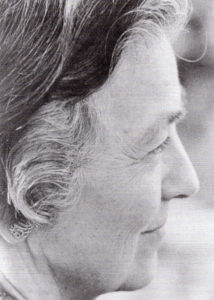
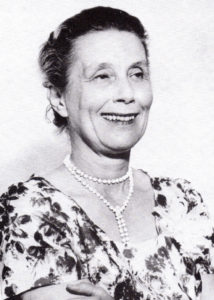
Born in Flint, Michigan in 1904, Myra Finsterwald Dreifus, a woman described as both serene and impulsive, moved to Memphis with her husband Fred in 1936. At first she “tried the social bit.” A friend had told her, “You’ve got to learn to play cards, or you’ll be a lonely old woman. “Well, I tried it,” Myra later reported, “and finally I told my friend I’d take my chance with old age and loneliness.”
While raising three children, she soon became involved in many volunteer projects, including the Memphis Junior Red Cross and the National Council of Jewish Women. In the early 1960s, while president of the Mental Health Association (which she had helped to found — “we were trying to do something for disturbed children,” she said — she discovered widespread hunger in the schools.
Despite federal economic surveys showing that at least 40,000 Memphis children could qualify for free or reduced-rate lunches, fewer than 700 children were getting them. Even more startling was the discovery that surpluses of both food and money were being turned back to the National School Lunch Program while in grade school lunchrooms children without food were required to remain seated, seeing and smelling the food of their more fortunate peers until the lunch period was over.
Haunted by this discovery, Myra confronted clubs, church groups, women’s groups — anybody who might listen and help — and gradually, steadily the movement known as the Fund for Needy School Children surfaced as an organization able to sway politicians, school officials and a large segment of the public.
Between 1946 and the early 1970s, her small band of volunteers grew to almost 400 working in 57 schools, and the number of children enrolled in the Free Lunch Program increased from 700 to 25,500 children.
In 1967 Myra and her volunteers maneuvered the organization into the Shelby United Neighbors (forerunner of the United Way of Greater Memphis) despite the objection of some that they did not meet all agency requirements: they had no office, no salaried staff, no expenses!
Her movement still has no headquarters, no salaried employees, no regular meetings and almost no structure. In Myra’s words, “It remains a creative movement in which each volunteer can bring something special to the program.”
With the free lunch program set up, she and her volunteers worked on providing clothes, eyeglasses, breakfasts, milk formula and layettes for the poor.
Myra helped found the Riverview-Kansas Day Care Center and worked hard to build constructive and harmonious relations between the various communities that make up our city She chided at least one mayor publicly for campaigning on the promise to represent all the people of Memphis and then admittedly speaking for only the majority during a time of racial strife.
In December 1968, while attending a White House Conference on Food, Nutrition and Health, she suddenly realized that the conference wasn’t going to deal with the problem of hunger. In the midst of the session, she fired off a registered letter (written on plain notebook paper) to President Nixon, challenging him to declare a national emergency on hunger and to expand the food stamp program “so everybody could be eating by Christmas.”
Most of Myra’ efforts were visibly successful; some were not. But having done what she could to resolve a problem she reflected the same equanimity regardless of the outcome.
Myra Dreifus, more than any other one person in the remote or recent past, personified the ability to transcend all the barriers that frequently fragment our community — racial, economic, educational, political, religious, social — in her effort to make Memphis a better place for all of us. Actually, she did not so much transcend (meaning to rise above) them; rather she moved through them with serene determination, probably because for her they did not exist.
In her activist years, Myra referred to herself as a “professional volunteer.” Later she enjoyed continuing education so much her husband referred to her as a “perennial freshman.” Others called her “the Children’s Crusader.” She deserves to have all Memphis call her “friend.”
Myra Dreifus took her chances with old age, dying at 82 in December 1986. She was not lonely.
Our Heritage Award for the year 1987 honors jointly Ida B. Wells-Barnett and Myra Finsterwald Dreifus, who in doing what they could, discovered what a difference they could make. All stand tall in Memphis because we stand successively on the shoulders of these rather frail women with strong wills. We celebrate their well-lived lies, treasure their respective examples, and cherish their memory as “women of achievement.”
HEROISM
for a woman whose heroic spirit was tested and
shown as a model to all in Shelby County and beyond:
Frances Coe
While others of her generation busied themselves with lady-like traditions of the South to which they were born, Frances Edgar Coe stepped into the public arena in the 1940s as president of the Planned Parenthood Association and vice president of the League of Women Voters. In 1948 she moved into elective politics and worked in Estes Kefauver’s campaign for the U.S. Senate.
In 1955 this Vassar graduate and former teacher was one of 16 candidates in the first election for the Memphis City School Board after political control of it ended. She won a seat and found her lifelong niche.
She served on the Memphis Board of Education for 24 years.
Through segregation, dismantling of a dual school system, integration, the draining of support into a private segregated system and the beginning of a resurgence of support for the public system, she always fought not only for equal education but for superior education for all children. She was president in 1972 when the board reorganized from five to nine members and instituted court-ordered busing.
We honor Frances for her refusal to be shaken from her vision of fairness, for the stubbornness that sustained her through the years of meetings and long arguments when the notion of a fine education could have been lost in the divisive atmosphere of prejudice and discrimination.
For her heroic efforts to cause change toward a better future for our children, we salute Frances Coe.
INITIATIVE
for a woman who seized the
opportunity to use her talents and created her own future:
Dorothy Gunther Pugh
In 1977 young dancers in Shelby County had almost no opportunities to perform. Luckily for them, a broadly trained dancer and highly talented instructor named Dorothy Gunther Pugh noticed.
She envisioned a professional ballet group created principally for young dancers whom she would instruct. She founded Memphis Youth Concert Ballet and gave the company’s first performance before a small audience at Hutchison School. From that first budget of about $4,700, Youth Concert Ballet has grown to an operation of $85,000 a year that performs original choreography regularly at The Orpheum. The company has performed at the Memphis in May International Sunset Symphony and on national television. Thousands of public and private school children are enriched by the young dancers’ performances.
To reach beyond ballet’s elitist image, Dorothy created a scholarship fund for minority dancers. Last year the company was judged to be an “intern company” by the prestigious Southeast Regional Ballet Association.
As she celebrates its 10th anniversary, Dorothy’s is the largest ballet company in town. The company’s new name — Memphis Concert Ballet — relinquishes the word “youth” and reflects her readiness to extend her work beyond the high school years.
Dorothy Pugh epitomizes the woman of initiative who seized the opportunity to use her talents and create her own future, and in so doing has provided creative stimulus, artistic quality and enrichment, not only for her dancers but also for the arts community of Memphis.
STEADFASTNESS
for a woman with a lifetime of achievement:
Susie Bryant
When Susie Bryant was a young girl in Greenwood, Mississippi she accompanied her mother on expeditions to bring soup and comfort to the sick.
She was raised in a home in which education was seen as essential and both parents worked to ensure that children knew their lessons before arriving at school each day. Susie left Mississippi and arrived in Orange Mound on January 12, 1936, with one child of her own, two of her sister’s and a trunk of her belongings. She immediately began what was to be a lifetime of community involvement.
In her early days she felt a special commitment to young children. She was director of her church’s youth department, organized the Dunbar Elementary PTA and later kept the children of working mothers in her home. She organized voting sites in precincts all over the city, and has directed “schools” to teach new voters how to go through the voting process.
While her activities have taken her all over the city, she is especially noted as an advocate for the citizens of Orange Mound. She was vital in the establishment of the Orange Mound Settlement House and has served a long term as president. People in the community know to come to Susie for help in meeting their needs.
Whether those needs have been for food, shelter, clothing or love, Susie has found a source. As she herself grew older, she became aware of the treatment (or mistreatment) of older persons in our society and added senior citizens to her list of those to help. Her organizing skills are immense; she has managed to help many individuals by recruiting others to join her efforts.
Susie Bryant believes that God will bless you for what you do for others. Because of her steadfast efforts for those in need, her life is filled with blessings.
VISION
for a woman whose sensitivity to women’s needs
led her to tremendous achievements for women:
Astrid Braganza
Since 1969 Astrid Braganza has worked with women imprisoned in the Shelby County Jail. Her vision has been, and still is, more humane treatment for these women and an opportunity for them to rehabilitate themselves.
Her volunteer work is done inside the jail by personal contact and by providing opportunities for worship and personal enrichment. It is tiring and demanding but she has never given up on the imprisoned women who need help.
Astrid, a native of India, was already there when Church Women United in the early 1970s documented two appalling problems that were being ignored by the local justice system. Astrid later described them: those dragging, empty hours in which women had nothing to do but stare at the bars and walls of their cells, play poker and dice, or for the more energetic, start squabbles that often degenerated into brawls.
A second problem she identified was ironic in the region that prides itself on being with the so-called Bible Belt: the women were denied their basic human right to worship God in any formal way.
From worship services held in a wide hallway on the fifth floor of the old county jail, to the disappointment of seeing women barred from a beautiful inmates’ chapel at the Penal Farm, and finally to services in a stark, simple chapel in the Criminal Justice Center, Astrid Braganza has held true to her vision. Many times she met with resistance and resentment from jail officials. She never let them stop her, however.
In our society, women behind bars are nearly invisible. Astrid Braganza has demonstrated through her vision and work with the criminal justice system that a better life for these women is possible.
VISION
for a woman whose sensitivity to women’s needs
led her to tremendous achievements for women:
Lorrine Cunningham
Lorrine Cunningham has given outstanding and vital leadership in seeking economic and social justice for everyone, whether the issue is wife abuse, job discrimination, or jail and prison conditions.
She joined the Civil Rights movement in 1963 in Jackson, Mississippi, where she and her Methodist minister husband were involved in the struggle to open churches to persons of all races. That was, she has said, “a traumatic and radicalizing experience.”
Since her arrival in Memphis in 1970, Lorrine has demonstrated that constant vigilance and a strong will can solve glaring human needs. When this self-described “little old lady in tennis shoes” talks, people listen — and they act.
As a lead of Church Women United, Lorrine was instrumental in development of the Transitional Center for Women, a residential program for women offenders, and in creation of the Second Chance Fund to help those women afford education and job training. As a founder and past president of the Economic Justice for Women Coalition, she generated projects to heighten public awareness of economic and equality issues facing all women. In recent years, she has pursued Shelby County officials demanding equal treatment and opportunities for women prisoners in the county jail.
Lorrine Cunningham’s achievements to better women’s lives are the result of her vision of a world where women can do and be everything they imagine.
STEADFASTNESS
for a woman with a lifetime of achievement:
Verla Petit
Verla Petit has devoted her life to service to the downtrodden, the forgotten and the rejected at Memphis Union Mission. She has given 35 years — first, as executive secretary, and since 1976 as director — to provide food, shelter and rehabilitation for men and women she calls “down-and-outers.”
Recently the mission has tended to whole families left homeless by rocky economic times.
Nearly from the day in 1951 when she entered the mission as bookkeeper and secretary to its founder Jimmy Stroud, she was involved in decision-making and administration for the mission’s programs. She is the founder and director of the Memphis Christian Servicemen’s Center and the 80-acre Victory Valley Bible Conference Grounds, both operated by the mission. She is a frequent speaker at Bible conferences and outreach programs.
Verla has worked in steadfast devotion to her God, firm in her belief that needs of the down-and-outers remain unchanged. She has said, “We take those that the police bring us, or the hospitals call about. We take those that left home, got on a bender and have drunk up every cent they have. We take them out of the bus station.”
Even before her involvement with the Union Mission, Verla taught Bible classes at the Strand Theatre, started a Tuesday night Bible class at Second and Madison, and made Sunday visits to Mud Island squatter homes. As one nominator said of Verla Petit, “If she was a woman in industry, she’d be running the company!”
Verla retired in July 1991 and travels frequently as a spiritual and inspirational speaker.
INITIATIVE
for a woman who seized the
opportunity to use her talents and created her own future:
Eunice Carruthers
As one of the 12 children in her family in Arlington, Tennessee, Eunice Carruthers made hats for dolls and decorated her own head with bows, flowers and ribbons. She carried that childhood interest into her adult life and began her career as hat maker when she made her own first hat to wear to church. Friends were so impressed that soon she was receiving calls for the handmade hats, and Unis Originals came into begin.
From working nights and weekends at home, she went on to enter a partnership — Carsala’s Boutique — and then went into business on her own with Unis of Memphis in 1965. Business was so good that Unis expanded to a new location in 1970.
But hats were not the only business of Eunice Carruthers. In 1955 she graduated from LeMoyne College and began a demanding, distinguished career in the education of handicapped children — including teaching, instructor evaluation and vocational placement.
Eunice retired from her teaching career, but still continues with her first love, the making of hats. Her life exemplifies her belief that “no black woman who has ever dared to dream great dreams, and who was willing to pay the price, will fail to realize that dream.”
Eunice is chairperson of the National Organ Transplant Fund and still sells designer hats but no longer creates them.
HEROISM
for a woman whose heroic spirit was tested and
shown as a model to all in Shelby County and beyond:
Nina Katz
Nina Katz is a survivor of the Holocaust and as such has spent her life working with special insight to combat racism, sexism and anti-Semitism. She shares her experiences during World War II with students across Memphis and Shelby County in the hopes that such tragic events will never again occur.
Nina has devoted 12 years striving to end illiteracy and the poverty that plagues non-reading adults. Her work is respected and honored nationally for her creative service to the cause of literacy.
In her own eloquent words, “As an eye witness to the European catastrophe, I came to realize at a very young age the importance of human survival. My love for humanity has been expressed through a strong feeling of commitment and deep dedication to my work in this community.”
Nina served as first female board chairperson for the Memphis Chapter of the National Conference of Christians and Jews. As a leader in Jewish women’s organizations, Jewish educational and cultural institutions, her skills in developing programs to enhance brotherhood and sisterhood among people of all races and faiths have been exemplary.
Nina Katz is a singular woman of valor and heroism.
Nina Katz had a hand in founding the Memphis Literacy Council, saving Facing History and Ourselves, and Diversity Memphis. She started an interracial, interfaith women’s discussion group called Coffee and Dialogue. Nina Katz passed away on February 8, 2014 at age 89.
In 2016 Nina Katz was chosen to be one of several prominent Memphians in the public artwork, Upstanders Mural, that is near the corner of Main Street and Huling Avenue.