
Eleanor “Dicky” Ehrlich

Women of Achievement
2004

HERITAGE
for a woman whose achievements still enrich our lives:

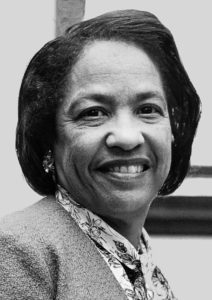
Eleanor “Dicky” Ehrlich

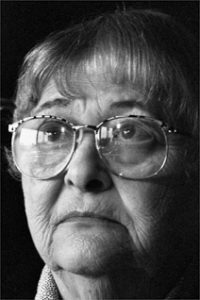
Eleanor “Dicky” Weile Ehrlich never stopped feeling lucky that she survived nine different German concentration camps.

So she never stopped teaching about the Nazi Holocaust. ‘‘There is too much to tell,’’ Dicky said. ‘‘There is so much yet not told. Just remember, it all did happen … and please keep it from happening again.’’

Dicky began life in Berlin where her mother owned a needlework shop and her father was a traveling manufacturer’s representative. As Hitler’s restrictions and persecution of Jews intensified, she and her parents moved in 1933 to Amsterdam where Dicky became a neighbor and sometime playmate of Anne Frank.

But soon the Nazis ended Holland’s 100-year neutral history by marching in with occupation soldiers. Eight times Dicky answered the door late at night to find Gestapo soldiers there. Eight times she talked or sang to them and they went away. A ninth time she didn’t awaken until two soldiers were looming over her bed.

The Weile family was loaded onto cattle cars to a camp in southern Holland. It was February 1943. The family was separated. Within eight months, her mother Tilla, who was assigned to tend to young children in the camp, caught scarlet fever. With only aspirin and sulfur available as medicines, Tilla died in November and was cremated. Dicky never forgot the smell of the smoke that blew over her as her mother’s body was incinerated.

Meanwhile, the Philips Company had persuaded the Germans to build in the camp a factory which would keep Dutch Jews in Holland as long as possible at a time when Jews from all over Europe were being shipped to death camps in Germany and Poland. Dicky always believed it was her training to build intricate radio tubes for V1 and V2 rocket weapons that delayed her departure to Auschwitz for a critical 10 months and saved her life. She was convinced that if she had arrived sooner, she would have been gassed with thousands of others.

Dicky reported with pride that she and her fellow inmates were able to damage about 60 percent of the instruments they made, without being detected, assuring that many of the German rockets never reached their mark.

In June 1944, she was shipped to Auschwitz, Poland, where three large chimneys turned the night sky orange and the stench of burning flesh was unreal. Though it was a while before she knew it, Dicky arrived in the notorious camp on D-Day, June 6. Her hair clipped short, number 81020 tattooed on her left arm, she was soon loaded on cattle cars again, bound for Reichenback in east Germany. She was moved four more times as the Germans dodged advancing Allied forces and kept the inmates manufacturing parts.

Finally, she arrived near Hamburg for the hardest work yet – shoveling mud to dig tank traps, ditches three yards wide and three yards deep, shaped like a V. Guards stood above, snapping whips to speed the exhausted workers.

Dicky was barely holding on. Fortunately, the Swedish Red Cross made a deal with Hitler to trade some concentration camp prisoners for German deserters. Dicky was on the second transport to Sweden. It was three days before the end of the war. She was 23 years old and weighed 88 pounds. She had spent over 2-1/2 years in nine concentration camps. She later learned that her father had been killed in the Auschwitz gas chamber on Oct. 1, 1944.

In 1948, she agreed to move to Atlanta to live with an aunt. Her ship arrived in the New York harbor as July 4 fireworks blasted. She met and married Sidney Ehrlich and began life as a wife, mother of two children and unstoppable public speaker. She became a deeply patriotic American who always flew a giant flag on Independence Day.

Wherever she lived in the United States, Dicky shared her story. She also taught teachers how to teach about the Holocaust: ‘‘To teach this to young people and to impress upon them how very lucky they are to live in this country with all of its freedoms, we must dig a little deeper – what does it do on a personal basis when all the freedoms we take for granted are taken away?’’

She described the forced walk of 2,000 inmates and 3,000 cows through snow for six days with paper shoes to wear and one slice of bread and snow to eat. She told about a trip that should have been three hours that went on for 11 days and nights, standing in a freight car with 209 other prisoners with three pieces of bread, no water and no modesty when allowed under a stopped train car to ‘‘use the bathroom’’ at gunpoint.

In 1997, she was interviewed and videotaped for Steven Spielberg’s Survivors of the Shoah Visual History Foundation. Dicky Ehrlich died in Memphis on May 1, 2001. She was 78.

Friend and colleague Rachel Shankman, regional director of Facing History and Ourselves, said, ‘‘No one who ever met her will ever forget her. What made her special to the children and teachers was her ability to bring that hard history to life, and talk about it with humor and resiliency.’’

A teacher who heard Dicky speak in Arkansas several years ago wrote a two-page letter expressing the power of Dicky’s testimony in changing her life. ‘‘I know that I will move through the world differently now. I hope that I will be a better person. I believe that what you have done here is to become a rescuer. Somehow, some way, your words continue to make me grow.’’
Ethel Niermeyer

Women of Achievement
2003

HERITAGE
for a woman whose achievements still enrich our lives:

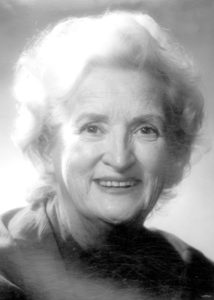
Ethel Niermeyer

Ethel Niermeyer spent 48 years working through the YWCA to broaden opportunities for girls and women and to stimulate awareness of and action on civic affairs.

Born in Mitchell, South Dakota, in 1887, she obtained a B.A. from Iowa State Teachers College in Cedar Falls and completed additional courses at Columbia University in New York. She started work in 1912 as a Girl Reserve Secretary in Akron, Ohio. Later she worked for the Y in Honolulu, spent four years at the YWCA in Istanbul, Turkey, and worked for the YWCA National Board.

Ethel came to Memphis in 1932 to serve as executive director, a position she held until her retirement in 1955.

During those years of racial segregation, she encouraged the development of a Negro YWCA branch, which was at first under the direction of an all-white board of directors. Under her leadership the board moved from having one African-American representative on a board to full participation in policy-making groups within the association. From racially integrated groups within the YWCA, the association became the only place in Memphis where integrated meetings of non-YWCA members could meet.

The Public Affairs Committee worked with people from other organizations to develop better state laws on adoption and to promote a hospital in Memphis where black doctors could intern. This was finally developed at E.H. Crump Hospital.

A Public Affairs Forum was established which held dinner meetings where local, national and international questions were discussed from various viewpoints and honest disagreement could be voiced without rancor.

Teen clubs were organized through the public schools and a summer camp was established in Hardy, Arkansas. Under Ethel’s directorship, a capital funds campaign was conducted to build a new central office and program building at 200 Monroe and a branch at 1044 Mississippi Blvd.

Work with girls and young women started in north Memphis in the Manassas area and the first black person was employed to work at the central office.

During World War II, the YWCA was one of four USO locations in Memphis. The YWCA oversaw activities at all four locations and remained open after the other three were closed.

An international group established by the YWCA led to the development of the International Group of Memphis and a group on equal rights for women led to the establishment of the Women’s Resource Center. Many outstanding women of Memphis received their early encouragement to become involved in civic affairs through their involvement at the YWCA, including 1987 Women of Achievement Heroism recipient Frances Coe.

Juanita Williamson

Women of Achievement
2002

HERITAGE
for a woman whose achievements still enrich our lives:

Dr. Juanita Williamson

Some are born with a gift for scholarship. Others are born with a gift for teaching. And a few special people are born with a gift for both. Juanita Williamson was one of these. Internationally recognized in linguistics, reading, and education, she is equally remembered for the special talent she brought to the classroom.

Born in 1917 in Mississippi, Juanita Williamson was raised in Memphis in a book-filled home and graduated from Booker T. Washington High School. A scholarship recipient, she graduated summa cum laude from LeMoyne College in 1938 and earned an M.A. from Atlanta University in 1948.

As early as fifth grade, Juanita Williamson knew she wanted a Ph.D. When she enrolled in the doctoral program at the University of Michigan, one of her professors made it clear that he didn’t believe linguistics was an appropriate pursuit for women. He also implied that he didn’t think much of minorities. Though she felt her work deserved otherwise, he failed her first paper. Determined to never have that happen again, she began to take down every word and memorize her notes. She received her Ph.D. in 1961.

She joined the faculty of LeMoyne-Owen College in 1947 and later became Professor of English and Chair of the Humanities Division. Publications include A Various Language (1971) co-authored with Dr. Virginia Burke and a standard reference in linguistic studies. Her reputation led to serving on the boards of the American Dialect Society, the Modern Language Association and others. She received a Rockefeller Fellowship, was honored by the Ford Foundation and the Black Studies Association. An Amistad Research Grant led to study of Southern and black speech. She presented papers at Princeton, Stanford and the University of Wisconsin. She found time for community activities such as the YWCA, Girl Scouts and League of Women Voters.

Juanita’s interest was the structure of language and grammar, her deep concern for the achievement of African-American children and the correlation between their learning performance and their speech. This led her to examine the effect of speech customs of the South on students. She was widely acclaimed for her research. Though she could have gone elsewhere, she chose to stay at LeMoyne-Owen. Committed to the role of historically black colleges she felt she could make a real difference in the lives of her students. According to author Dr. Gloria Wade Gayles, academic excellence at LeMoyne-Owen was synonymous with Dr. Juanita Williamson. She was tough, witty, brilliant and humble. And she cared about students in and out of the classroom, providing financial assistance for those who fell on hard times.

She died in 1993, but her greatest gift is still giving – empowering her students who continue to contribute today. They pass on her torch of knowledge and strength of character.

Marion Keisker

Women of Achievement
2001

HERITAGE
for a woman whose achievements still enrich our lives:

Marion Keisker

Until her death in 1989 at the age of 72, Marion Keisker blazed a trail for women in many fields, including broadcasting, theater, writing, the military and women’s rights.

In the 1950s, while working as an assistant to the owner/producer of Memphis Recording Service and Sun Records, Sam Phillips, she was the one who had first contact with Elvis Presley when he came to record a song for his mother. “Call this kid Elvis,” she told Phillips, “I’m telling you, Sam, he’s got something.” The rest is history.

Her broadcasting career includes 10 years (1945-55) at the top of the ratings with her WREC radio show Meet Kitty Kelly. At one time, she was responsible for daily programs on every radio station in the city. Hers was the first voice heard on WHER, the first all-female radio station in the country, where she read the news from 1955 to 1957.

Shortly thereafter, Marion joined the Air Force with direct commission as a captain. After training at Lackland AFB in San Antonio, she was assigned to Vance AFB in Enid, Oklahoma, where she was the only woman officer (other than nurses). In January of 1959, she was transferred to Ramstein AFB in Germany, overseeing the largest armed forces television station in the world. Next, she served as the only woman line officer at Patrick AFB in Florida. She retired in 1969 as a major and returned to Memphis.

It was then that she became deeply involved in the women’s movement. As founder and president of the Memphis Chapter of NOW from 1973 to 1974, Marion led the fight to “de-sex” the classified ads in local newspapers so jobs would no longer be classified by gender. Promoting the Susan B. Anthony silver dollar, she said, “They finally gave us our money, now let’s show them its effect on the economy.” Through her membership in the Women’s Media Group, she fought discrimination against women in the media.

In the 1970s and 1980s, she became known for her theater/broadcasting work. She was voted the city’s Best Actress three times. She also led the “Shy Persons Club” and organized to keep Prairie Home Companion on WKNO.

Always on watch, Marion’s frequent letters to the editor of local newspapers often spotlighted incidents of discrimination against women. In one such letter printed in 1986 in The Commercial Appeal, Marion responded to the issue of a lax attitude toward sex discrimination saying, “… gains are accepted as the norm by those who benefit from them. Those who grow weary in the fight for equality (i.e. justice) relax. Progress slows or is reversed.”

Marion Keisker’s spirited service to the community and steadfast crusade for equal rights has benefited all women of Memphis and Shelby County. Her call to remain diligent is a strong reminder that the fight is not over.

Charl Ormond Williams

Women of Achievement
2000

HERITAGE
for a woman whose achievements still enrich our lives:

Charl Ormond Williams

Educator. Political force. Suffragist. Charl Ormond Williams juggled all these roles in an era that rarely saw a woman work outside the home.

Appointed superintendent of Shelby County Schools in 1914, Charl, only 30 years old, redefined educational administration in the six years she served in this capacity. Through her leadership and vision, the county school budget was doubled with more than a quarter of a million dollars allocated to new construction and equipment.

Charl’s world travels began after her 1921 election as the first Southern woman president of the National Education Association. That next year, as the newly elected field secretary for the NEA, she logged an average of 40,000 miles a year throughout the United States. For three decades following her involvement with the NEA, she helped strengthen the organization and lobbied for a federal Department of Education and federal aid to education and campaigned to end discrimination against married women as teachers. She took her crusades abroad to Japan, India and Pakistan in 1953 to organize teaching groups, and visited Russia two years later to study educational methods.

Politically adept, she also became a “first” in the political arena, the first woman from the Volunteer State to become a member of the Democratic National Committee. She was also elected vice chairman in June 1920, the first woman to hold such a high post. In Nashville that August, she was the leader of the combined suffrage forces as overall chairman of the ratification efforts pushing to make Tennessee the 36th and final state to ratify the 19th amendment. She stood by Gov. A.H. Roberts’ side as he signed Tennessee’s ratification papers of the so-called Susan B. Anthony amendment making votes for women the law of the land.

In 1935, Charl was elected president of the National Federation of Business and Professional Women’s Clubs. She also served a term as national vice president of the Parent Teachers Association, and in 1955, she was elected vice president of Phi Beta Kappa.

So respected as a leader and strategic planner, Charl was named one of the 12 American women competent to hold the presidency of the United States by the president of the International Federation of Business and Professional Women’s Clubs.

Charl Ormond Williams’ legacy is an enduring one, having affected education for our children, state and federal laws, and the business community three decades after her death.

Lucille DeVore Tucker

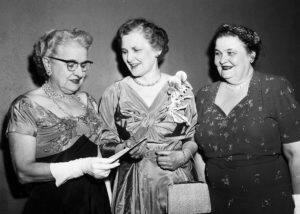
Lucille DeVore Tucker (left)
Women of Achievement
1999

HERITAGE
for a woman whose achievements still enrich our lives:

Lucille DeVore Tucker

Lucille DeVore Tucker discovered what was to become the passion of her life on a visit to friends in Bethlehem, Pennsylvania, in 1946.

The Girls Club of Bethlehem, a new affiliate of Girls Clubs of America, was the focus of her friends’ volunteer efforts. A visit there inspired her to return home to Memphis and begin a project that would eventually enrich the lives of more than 150,000 girls, and still counting.

She encouraged others to support this new project designed to change the lives of girls in Memphis. Girls Club of Memphis, which is now Girls Inc., was opened later that same year.

Throughout the club’s many changes, Lucille Tucker was always there, supporting the staff and girls with her time, talent and fundraising efforts. Even after she stepped down as president in 1964, she remained active and involved until her death in 1983.

She often mentioned the blessing that people missed by being concerned about color rather than hearts and minds, and she shared this philosophy with girls her entire life. She regularly shared her home with girls who needed a temporary place to stay and connected them to jobs and education.

She worked with New York Life Insurance Company for more than 50 years, and was so respected and loved that the top executives of the company flew to Memphis for her retirement party in 1971.

At the party, it was announced that the Girls’ Club center at Seventh and Keel was to be named the Lucille DeVore Tucker Center, in honor of a woman whose accomplishments have continued to enrich the lives of girls for more than 50 years.

Lucie Campbell

Women of Achievement
1998

HERITAGE
for a woman whose achievements still enrich our lives:

Lucie Campbell

Lucie Campbell, the youngest of 11 children, was born to former slaves in Mississippi in 1885. Following her father’s death, Lucie’s mother moved the family to Memphis. Lucie graduated as the 1899 valedictorian from Kortrecht High School, which was later renamed Booker T. Washington High School. She returned there to teach until her retirement.

Lucie served five years as president of the Negro Teachers Association and was vice president at-large of the American Teachers Association. In 1916, she was one of nine founding members of the Baptist Training Union Congress of the National Baptist Convention USA, Inc. Shortly after its inception, she became the national music director. She was a self-taught musician who composed more than 80 hymns, many of which she did not copyright until 1950. The majority of her compositions were given to the Baptist denomination and helped to create and maintain an atmosphere of religious fervor and optimism necessary to keep the convention intact.

In 1943, she was invited by President Franklin D. Roosevelt to attend a conference in Washington on Negro Child Welfare. She was a member of the National Policy Planning Commission of the National Education Association in 1946. Lucie was considered an accomplished and dynamic orator and was a popular women’s day speaker. Like many black professional women of her time, she devoted much of her life to others. She married the Rev. C.B. Williams of Nashville in 1960 and died there in 1973 following a brief illness.

Lucie Campbell is one of many African-Americans, and few Memphians, featured in the exhibit, “Wade in the Water: African-American Sacred Music Traditions,” which was at the National Civil Rights Museum. This exhibit, organized by the National Museum of American History and the Smithsonian Traveling Exhibit Service, opened in Washington, D.C., and traveled to more than a dozen U.S. cities.

Lucie Campbell made great contributions to a collective struggle. She was a committed and inspirational teacher, both in the academic and arts fields. She did critical community work within her profession that aimed to improve opportunities for teachers and students. She worked diligently to inspire people and to shape a musical tradition that spoke to the spiritual side of a people doing the daily and necessary work of resisting oppression, building family and community institutions that would enable them to take the struggle to another level, and openly challenge a system of inequality and injustice.

Sara Roberta Church

Women of Achievement
1997

HERITAGE
for a woman whose achievements still enrich our lives:

Sara Roberta Church

Sara Roberta Church was a pioneer in social justice and political activism. With unstinting dedication, she worked to advance women’s leadership positions in local and national politics. With her aunts, Mary Church Terrell and Annette E. Church, Roberta Church was a champion of women’s rights.

In the fall of 1940, when it appeared the Republican candidate, Wendell Wilkie, might defeat President Franklin D. Roosevelt, the E. H. Crump organization moved to eliminate her father, Robert R. Church Jr., as a Republican political leader. They seized his property, including his home and office, allegedly for taxes. Church, campaigning in Pennsylvania, never returned to reside in Memphis. He spent much of his remaining life in Chicago and Washington.

After her father’s death in 1952, Roberta returned to Memphis. Despite her family’s enemies, she ran for public office, replacing her father on the ballot. She became the first African-American woman to be elected to the Republican State Executive Committee.

In 1953, following the election of President Dwight D. Eisenhower, Roberta was appointed Minority Groups Consultant in the Department of Labor. Her position as an African-American woman negotiating with company officials over fair employment practices required unusual skill and diplomacy. Roberta later accepted a career appointment with the Department of Health, Education and Welfare working as a consultant with the Rehabilitation Services Administration. In 1970, President Richard M. Nixon appointed Roberta Church to the President’s Advisory Council on Adult Education.

The author of many professional articles, Roberta wrote, with Annette E. Church, a family history, The Robert R. Churches American Memphians. Recognizing the dearth of historical materials on African-American Memphians, she and Ronald A. Walter wrote Nineteenth Century Memphis Families of Color, 1850-1900. Her last published works were Facts About Beale Street, 1849-1870 and Occupations of Women, 1855-1870.

Ebony magazine recognized Roberta in a feature story. Alpha Phi Alpha Fraternity presented her with a certificate of merit for promoting job opportunities for minority youth. The Association for the Study of Afro-American Life and History selected her to be honored during Black History Month. She was included in the first edition of Who’s Who in American Women and was cited for high-quality performance of duties by the federal government.

Roberta Church loved Memphis deeply and returned to her home community following retirement. Her interest in local history involved active work in the Shelby County Historical Commission, especially the preservation of Church Park, at one time the largest park and entertainment center for African-Americans in the South.

Marion Griffin

Women of Achievement
1996

HERITAGE
for a woman whose achievements still enrich our lives:

Marion Griffin

Marion Griffin was not only the first woman licensed to practice law in the State of Tennessee, she was also the first woman elected to the Tennessee General Assembly.

“Miss Marion” was born and raised in Greensboro, Georgia, but began her legal career in Memphis as a legal stenographer in the office of Judge Thomas M. Scruggs. She read law under Judge Scruggs, presented herself for examination of her knowledge of law to both Chancellor DeHaven and Circuit Court Judge Estes, was found eminently qualified to practice law by both of them and was so certified on Feb. 15, 1900.

It was the custom then and for many years afterward for an aspirant to the legal profession to study law under the tutelage of a practicing lawyer who, when he thought the aspirant sufficiently knowledgeable, referred him to a sitting judge of the local Circuit Court and to a sitting chancellor of the local Chancery Court. The judge and chancellor in turn tested the professional competency of the aspirant for admission to the bar. The Tennessee Supreme Court then issued a license to the aspirant and he was free to practice law throughout the state.

Although Marion was properly certified by two sitting judges of distinction as ready for admission to the bar, and although she petitioned the Tennessee Supreme Court in both 1900 and 1901, she was twice barred solely on the basis of her gender.

She then enrolled in the School of Law of the University of Michigan and in 1906 earned the degree of Bachelor of Laws. She was one of only two women in her class at the University of Michigan Law School. She would have preferred to enroll at the School of Law at the University of Virginia where members of her family had gone, but it did not accept women at that time or for many years thereafter.

Fortified by certification from two sitting judges and a law degree from one of America’s pre-eminent law schools, either of which would have been sufficient to get a male admitted to practice law, Marion Griffin then began the process of energizing the Tennessee Legislature to pass an act giving women the right to practice law in the jurisdiction. At first she was, in her words, “greeted with wisecracks and guffaws,” but she persisted and ultimately the bill was passed on Feb. 13, 1907 and approved by Governor Malcolm Patterson on Feb. 15, 1907.

On July 1, 1907, Marion Griffin became the first woman admitted to practice law by the Supreme Court of the State of Tennessee, and was sworn in and enrolled as a member of the local bar.

She practiced law in Memphis for more than 40 years from an office located variously on Main Street, on Court Avenue and for many years in the Goodwyn Institute Building on the southwest corner of Third and Madison, the present site of the First Tennessee Bank building.

Suffragists of Shelby County

Women of Achievement
1990

HERITAGE
for a woman whose achievements still enrich our lives:

Suffragists of Shelby County

In 1920, Tennessee was the 36th and final state to ratify the 19th Amendment. As the nation celebrated the 70th anniversary of the passage of the 19th Amendment to the U.S. Constitution, which granted to women the right to vote, Women of Achievement honored the contributions of the Suffragists of Shelby County.

Several women played important roles, yet we only have records on a few. Elizabeth Avery Meriwether published The Tablet, in which she campaigned for the enfranchisement of women. This Memphian was the national president of the American Women Suffrage Association, succeeding Elizabeth Cady Stanton. Elizabeth Meriwether traveled around the nation to speak for women’s rights and suffrage. But she began her efforts on behalf of women in Memphis. In 1876, she rented the Memphis Theatre to talk about “American Law as it relates to Women,” and documented how the laws treated women as the property of men.

Elizabeth Lisle Saxon was appointed to the presidency of the Tennessee Equal Suffrage Association and she traveled to the state for the cause. She spent much of her time in Memphis, writing and speaking on women’s causes. She combined her work on suffrage and temperance. Working with her was Lide Meriwether, Elizabeth’s sister-in-law. After raising her own family, Lide championed many causes related to women (temperance and anti-vice causes). She even took prostitutes into her home and trained them for other occupations. In the 1880s and 1890s, her attention was devoted to getting women the vote. As president of the Tennessee Equal Suffrage Association, Lide organized petition drives and even traveled to Washington to testify before Congress.

The fight for women’s right to vote was not limited to white women. Women of color were also involved in this struggle. Mary Church Terrell was born in Memphis in 1863. In addition to her many accomplishments in Washington D.C., Mary was a national leader working on the advancement of women and African Americans. She was an active member in the National American Woman Suffrage Association. She spoke at national conventions and kept Susan B. Anthony, Jane Addams, and her other white sisters abreast of the specific problems of colored women.

Ida B. Wells, honored as a Woman of Achievement in 1987, was not quiet on this issue. She was an ardent and dedicated suffragette.

The work of these early pioneers was continued by younger women who joined at critical moments. One such woman was Charl Ormond Williams. Known primarily as an educator, she served as Shelby County superintendent of schools for eight years and was the National Educational Association’s official representative in Washington. Charl was also a politician. In 1920, she served as the vice chairperson of the Democratic National Committee. In Nashville, she led the combined forces to a victory in lobbying the state of Tennessee to ratify the 19th Amendment.

The Meriwethers, Saxon, Terrell, Wells, Williams, and their nameless sisters made an important contribution which the women of Shelby County and the nation must acknowledge and use wisely.