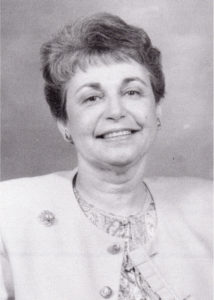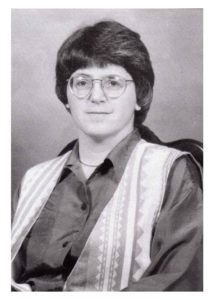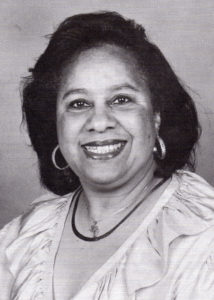

Yellow Fever Heroines and Martyrs

Women of Achievement
1986

HERITAGE
for a woman whose achievements still enrich our lives:

Yellow Fever Heroines and Martyrs

Memphis was just a half-century old when it faced the most devastating crisis of its history — the decade of death and desolation brought on by the yellow fever epidemics of the 1870s.

The deadly disease was no stranger to our city. In several previous epidemics many hundreds of Memphians had suffered yellow fever’s chills, fevers, merciless pain and agonizing death. But no one was prepared for the unprecedented horror of the outbreaks that visited Memphis in 1873, 1878 and 1879. When it was all over, the combined casualties of these epidemics in a city of 50,000 residents totaled some 24,000 cases of the disease and 7,745 deaths.

The cause and care of this mosquito-transmitted disease were then unknown. With each new outbreak, thousands fled the stricken city, many never to return. Other thousands stayed, may to suffer and die.

Our heritage award honors all the women who responded so gallantly in Memphis’ time of disaster. They were women of various races and creeds, women from all stations of life, who worked tirelessly, visiting homes, distributing medicine and food, nursing the sick, caring for the orphaned, comforting the dying. The names of most of these women have been lost with time, but we are fortunate to know of the deeds of some individuals, and to have a record of the work of women of the Roman Catholic and Episcopal religious orders. We will be naming these women for you, for their names and their actions symbolize the achievements of all of those we honor.

The epidemic of 1873 began in early August when two men infected with yellow fever were put ashore in Memphis from a northbound steamer. Within days the disease was rampant in the city. Among the first women who gave their lives fighting the fever were these, who died that August:

Sister Gabriel
Sister Bonaventure
Sister Mary of Nazareth

By September 25,000 people had fled Memphis by boat, train or wagon. And we know that September was the month that Sister Gertrude died.

In October, at the epidemic’s peak, at least 50 to 60 people were dying each day, and the total of dead had reached 2,000 by the month’s end. We know some details about two of those deaths.

Emily Sutton, a 27-year-old prostitute who practiced her profession under the name of Fannie Walker, had abandoned “the trade” but remained in the city to nurse victims of the dread disease. She fell victim herself on October 4, 1873.

At the other end of the social scale was Mattie Stephenson, a college student who came from Illinois on October 5 to join her classmate, Lula Wilkinson of Memphis, as a volunteer nurse at the Walthall Infirmary. On October 18 Mattie died of the fever. On the marker of her grave at Elmwood Cemetery are the words, “She died for us.”

Here are the names of three other caregivers who died in October of 1873:

Sister Mary Joseph McKernan
Sister Martha Quarry
Sister M. Magdalen McKernan

The 1878 epidemic was the most frightful one. Some 30,000 people, recalling the 1873 outbreak, fled Memphis in terror within four days after the first death was reported in mid-August. The first death of someone caring for the ill recorded in 1878 was that of Sister Veronica Gloss, in August.

By September the city was, in the words of one eyewitness, “a waste of death, destitution and destruction.” Amid sweltering heat and scenes of indescribable horror, people died in such numbers that corpses had to be buried in shallow trenches. Visiting the homes of the stricken, relief workers would find only silence where whole families lay dead.
One marker in Elmwood reminds us of one of the best-remembered heroines of the 1878 epidemic. It is inscribed, “Annie Cook. Born 1840. A Nineteenth Century Mary Magdalene who gave her life to save the lives of others.

Annie was the Madam of Mansion House on Gayoso Street, famous as “the wickedest spot between St. Louis and New Orleans.” In August, as soon as the fever invaded Memphis, she had closed down her establishment and turned its gilded and mirrored rooms into a hospital for the sick and dying. Nursing them, Annie Cook soon was herself struck down by the disease. She died on September 11, 1878.

Here are the names of others who died in September of that year while ministering to the victims of yellow fever:

Sister Constance
Sister Thecia
Sister Ruth
Sister M. Dolores Gloss
Sister Alphonse Yakel
Sister Vincentia
Sister Stanislaus
Sister Wilhelmina

The frosts came at last, in late October, and killed the mosquitoes. By then, an estimated 17,000 of the 20,000 Memphians who had remained in the city had contracted yellow fever. Of those, 5,150 were dead.

Here are names of some who died in October 1878:

Sister Frances
Sister Mary Laurentia Yakel
Sister Mary of St Joseph

A depopulated, bankrupt Memphis was in such dire straits that the city surrendered its charter to the state in January of 1879. But the ordeal was still not over. That summer another epidemic killed 595 of the city’s remaining citizens. And once more the women responded.

These are the names of some of the nursing women who died in 1879:

Sister M. Dominica Fitzpatrick
Sister M. Bernadine Dalton
Sister M. Joseph McGary

Tonight, as we honor the martyred dead, we also honor the dedication of those who survived. We can name only a few of these heroines. We know that Mattie Stephenson’s college classmate, Lula Wilkinson, recovered from the fever. And we know that among the religious women stricken with the disease, the following also survived to continue their good works:

Sister Hughetta Snowden
Sister Clare
Sister Helen

But what of the thousands of brave women whose names we shall never know? We especially wish to honor them. We do know, for instance, that a large proportion of the 3,000 women who served as nurses in the catastrophic 1878 outbreak of the fever were black women. We do not know their names. But it is fitting that we remember them as women of achievement, for we know that they, like all heroines and martyrs of the fevers — the named and the nameless, individually and together — demonstrate all the qualities our Women of Achievement awards recognize and value:

They were women who had the courage to choose the harder path.

Their initiative allowed them to function effectively amidst chaos and despair.

Their determination made them keep striving for solutions to overwhelming problems, and their vision allowed them to see a better future worth striving for.

Their steadfastness caused them to return again and again to a task that offered little beyond the satisfaction of meeting a great need.

And their heroism led them to risk everything, even life itself, for a worthy cause.

They have left us a heritage of unsurpassed valor. It is a heritage to cherish.
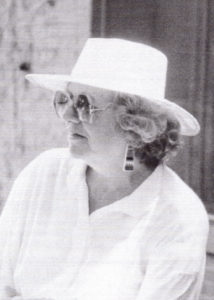
Joan Turner Beifuss

Women of Achievement
1986

DETERMINATION
for a woman who solved a glaring problem despite
widespread inertia, apathy or ignorance around her:

Joan Turner Beifuss

By the first week of the sanitation strike in 1968, Joan Beifuss had instituted Rearing Children of Goodwill, a desegregation workshop similar to one she had been involved in a few years before in Chicago. Several weeks later, the former Sun-Times reporter marched with Dr. Martin Luther King, Jr. and covered the strike for the National Catholic Reporter.

Shortly after Dr. King was assassinated, Joan joined an ad-hoc committee formed to understand the meaning of the events they had witnessed. In 1972 she began approaching publishing houses with a book based on the articles and interviews collected by the group. New York houses rejected it because it wasn’t “commercial.” While teaching at Memphis State University, she submitted it to the regional and university presses. They rejected the manuscript.

In 1985, at her own expense, she published At The River I Stand: Memphis, the 1968 Strike and Martin Luther King. Readers can’t put the book down so caught are they in the inexorable rush of events and the conflicts that create social change.

It was Joan’s determination that this story would not be lost that carried her through 17 years of working on the manuscript.

Joan later received the Dr. Martin Luther King Jr. Human Rights Award from Memphis State University in 1987, the T.O. Jones Award and others. At The River I Stand became part of an 18-volume series, Dr. Martin Luther King Jr. and the Civil Rights Movement in 1989. In 1990 St. Luke’s Press published a hardbound version. Joan died of lung cancer January 7, 1994. She was 63.

Maxine Smith

WOMEN OF ACHIEVEMENT
1986

COURAGE
for a woman who, facing active opposition,
backed an unpopular cause in which she deeply believed:

Maxine Smith

Memphian Maxine Smith first challenged racial bigotry when she was eight years old and kept asking for “Mister” Joseph Atkins when visiting her father at the Veterans Administration hospital, despite the clerk’s rebuke, “We don’t refer to niggers as Mister.”

Since 1957 when she was denied admission to Memphis State University graduate school despite her Master’s degree from Middlebury College in Vermont, Maxine Smith has been, in the words of former Memphis Police Director Buddy Chapman, “the conscience we should have had.”

One of the first female members of the Memphis NAACP board, Maxine was appointed executive secretary in 1962. She coordinated boycotts, which forced downtown merchants to desegregate, and sit-ins that opened public facilities — libraries, restrooms, parks, drinking fountains — to African Americans.

The instigator of “Black Mondays” in 1969 when 67,000 black students stayed home from school, Maxine has been referred to as the most powerful woman in Memphis. Along the way, she has been jailed, threatened, maligned, despised. She often has cried herself to sleep and her health has suffered from the demands of the life work she chose.

Admittedly strong-willed and stubborn, Maxine Smith says she will not stop until there is perfect racial equality. “I believe in what I am doing,” this courageous woman says.


Maxine Smith served as the Executive Secretary of the NAACP Branch of Memphis, held a position on the Memphis Board of Education, was elected president of the Memphis Board of Education in 1991, and continued in those roles until her retirement in 1995. Smith was presented with the Freedom Award by the National Civil Rights Museum in 2003, and Maxine Smith STEAM Academy was named in her honor.

She passed away April 26, 2013.

Bonnie Thornton Dill

WOMEN OF ACHIEVEMENT
1985

VISION
for a woman whose sensitivity to women’s needs
led her to tremendous achievements for women:

Bonnie Thornton Dill

Bonnie Thornton Dill received her Ph.D. in sociology from New York University and today is associate professor in the Department of Sociology and Social Work, and director of the Center for Research on Women at Memphis State University. Her vision improves the lives of many women.

Through her leadership the Center was established to promote, advance and conduct research on working class women in the South, and women of color throughout the nation. The Center has become an integral part of MSU and the wider community through its sharing of research knowledge and information for curriculum development and community education.

Bonnie’s childhood experiences as a student in the predominantly white University of Chicago Lab School, and her later active participation in the Civil Rights movement, led to her interest in examining the impact of racism, classism and sexism on the occupations, incomes and lifestyles of women of color.

What makes Bonnie Thornton Dill a woman of vision is said best in the words of her nominator: “She has made a difference in my life, and in the lives of many women.”


Bonnie left Memphis in 1991 for a teaching position in the Department of Women’s Studies at the University of Maryland – College Park.  She chaired the department for eight years and is Founding Director of the Consortium on Race, Gender, and Ethnicity at the University of Maryland.  She served as president of the National Women’s Studies Association from 2010-1012, was vice-president of the American Sociological Association, and has chaired the Advisory Board of Scholars for Ms. Magazine.  She currently serves as dean of the College of Arts and Humanities at the University of Maryland.

Zana Ward

WOMEN OF ACHIEVEMENT
1985

STEADFASTNESS
for a woman with a lifetime of achievement:

Zana Ward

For 30 years Zana Ward taught in Memphis City Schools while putting in many hours as a volunteer. Active in her church as a teacher, chaplain and choir member, she has also volunteered her time and energies to a number of civic organizations. That includes serving the last 11 years as president of the National Council of Negro Women.

Zana is responsible for the Right to Read program for low income students at Lakeview School, and has been instrumental in helping unwed mothers continue their education and find jobs. As project director of the coalition known as Women in Community Services, she also has organized volunteers to screen applicants for the Job Corps.

Zana was a Girl Scout troop leader for 17 years. Her concerns about childcare led her to a position on the board of Community Day Care. She somehow also found time to serve as president of the Federation of Colored Women’s Clubs in Memphis, and vice president of the state organization.

Zana Ward is known in our community as a woman who is always ready to help others find their paths to success.

Judy Peiser

Women of Achievement
1985

INITIATIVE
for a woman who seized the
opportunity to use her talents and created her own future:

Judy Peiser

Judy Peiser is co-founder and executive director of the Center for Southern Folklore, a nonprofit multimedia corporation that produces films, records and books documenting the rapidly disappearing folk traditions in the Southern United States. The Center has produced 15 films, two slide shows, two record albums, four travelling exhibits and two books (to date).

Judy has secure grants from approximately 50 local, regional and national organizations, has presented the Center’s work to more than 100 interested groups across the country and has been the recipient of more than 50 national and international film awards. Her most recent project has been the development of a cultural plan for the renaissance of Memphis’ historic Beale Street.

In addition, she and the Center have opened the restored Old Daisy Theater on Beale “as a beginning of a folk life museum that will include everything from cooking demonstrations to multimedia exhibits.”

In its 1984 Register, Esquire magazine named Judy as one of the young people who is “changing America.”


The Center moved in August, 1993 to the former Lansky’s Clothing Store building at Beale and Second, where visitation tripled. An expanding catalog and gift shop are major revenue sources. Judy hosts both television and radio shows on Southern heritage and produces the annual Memphis Music and Heritage Festival downtown.

Arlene Stamm

WOMEN OF ACHIEVEMENT
1985

HEROISM
for a woman whose heroic spirit was tested and
shown as a model to all in Shelby County and beyond:

Arlene Stamm

Diagnosed with multiple sclerosis 23 years ago, Arlene Stamm wheeled herself to the center of the struggle for the rights of the disabled.

Even though she was in a wheelchair, this wife and mother of two, and a woman active in her synagogue, has used her innate abilities cheerfully and selflessly to enhance the lives of others.

Arlene was an instrumental partner in the formation of most every project undertaken by the Multiple Sclerosis Society and the Easter Seals Foundation. According to a co-worker, she is a “walking encyclopedia” of community resources for the handicapped. As a volunteer with West Tennessee Talking Library, Arlene received the Volunteer of the Year Award. She also has served on the Mayor’s Advisory Committee on the Disabled.

In the word of one of those who nominated her, Arlene Stamm “works tirelessly to assure access for the disabled to the richness of community life.” She is a person who loves life and heroically lives it to the fullest,  a woman whose own positive attitude lights all our lives.

Arlene was public relations specialist for the Northeast Alzheimer’s Consortium and consults with businesses on compliance with the Americans with Disabilities Act of 1990. Arlene Stamm passed away February 13, 2009 at age 70.

Frances Wright

Women of Achievement
1985

HERITAGE
for a woman whose achievements still enrich our lives:

Frances Wright

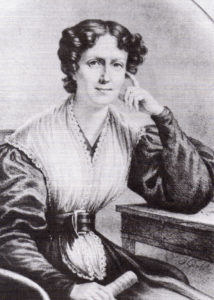
Frances Wright was a wealthy 30-year-old Scotswoman when she came to the Tennessee wilderness in 1825 to make a reality of her dream: “To develop all the intellectual and physical powers of all human beings without regard to sex or condition, class, race, nation or color,” as she put it.

With the advice of land speculator Andrew Jackson, who later became president of the United States, Frances bought a 2000-acre tract on the Wolf River near the frontier settlement of Memphis. She named it Nashoba. There she worked alongside former slaves whose freedom she had bought, and a handful of white colonists who shared her utopian views.

They cleared land, planted crops, constructed log buildings. From the start however Nashoba was plagued by harsh realities of climate, economics, malarial fevers and the hostility of neighbors who denounced the community as a center of “free love” and “miscegenation.”

In 1830, when it was clear that the experiment had failed, Frances Wright arranged for the resettlement of Nashoba’s entire black population to black-ruled Haiti, which had just won its independence from France.

Until her death 22 years later, this woman who was ahead of her time vigorously advocated abolition of slavery, universal public education, religious freedom and total equality of the sexes. Frances Wright remains today one of the most widely acclaimed women who ever lived in Memphis and Shelby County, Tennessee.

Angie D’Agostino

WOMEN OF AChIEVEMENT
1985

DETERMINATION
for a woman who solved a glaring problem despite
widespread inertia, apathy or ignorance around her:

Angie D’Agostino

Long before domestic violence became a hot issue in the Tennessee Legislature, Angie D’Agastino was working throughout the community to furnish services desperately needed by women and children who had no place to turn.

In 1976 she began as a volunteer answering crisis-line phones, which were operative for only five hours per day. She then became coordinator of the Committee on Spouse Abuse, testified before legislative committees and organized lobbying efforts.

As program director of the YWCA, she has worked through the new media to educate the community on domestic violence, and has designed and conducted workshops to garner support for spouse abuse services. She has trained staff and volunteers to counsel and assist clients and has worked withy other organizations and agencies who provide help. Angie also manages the shelter facilities at the YWCA.

Angie’s pioneering work has been instrumental in providing these services and solving glaring problems in spite of active opposition from organizations and individuals who believe that such services are destructive to the family unit.

Since leaving the YWCA in 1988, Angie has continued to direct her energies toward issues that others are reluctant to address. As executive director of the Aid to End AIDS Committee from 1989 to 1992, Angie worked with people living with AIDS to provide direct services and to raise community awareness about AIDS. She became a supervisor at Case Management, Inc., working with the chronically mentally ill to ensure that they are treated with dignity and respect, and that they are not isolated from our larger community.

Minerva Johnican

WOMEN OF ACHIEVEMENT
1985

COURAGE
for a woman who, facing active opposition,
backed an unpopular cause in which she deeply believed:

Minerva Johnican

The year was 1972 and Minerva Johnican, teacher and librarian, dared to run for public office in a city controlled mostly by conservative white men.

She didn’t win that first time, nor the second time. But three years later, when she was appointed to the County Commission in 1975, Minerva became the first black female Commissioner in Shelby County, Tennessee.

When she ran for Congress and was defeated in 1982, many people thought that Minerva had made a fatal mistake by opposing “the singularly most powerful man in Shelby County” at that time — U.S. Rep. Harold Ford. But she had turned her back on her namesake, the Roman goddess of wisdom, as some thought. Minerva stepped over political party lines. She stepped over the lines of race and gender, too, to form a constituency which carried her to victory in 1983 as the first black person to win an at-large position on the Memphis City Council.

Minerva Johnican dared to challenge society’s imposed boundaries to win a triumph for blacks and for women. She remains her “own” woman.


Ms. Johnican ran for city mayor in 1987 and finished in second place behind incumbent mayor Dick Hackett. She was the first African-American woman to be a serious candidate for the position. In 1990, she became the first African-American and the first woman to serve as Shelby County Criminal Court Clerk. In her tenure as clerk, she won three national awards. Ms. Johnican worked on Steve Cohen’s 2006 and 2008 races for the 9th Congressional District in Memphis.

Minerva Johnican passed away on March 8, 2013, at the age of 74.