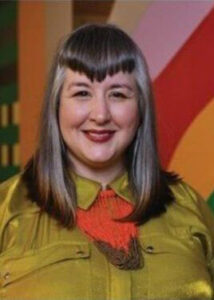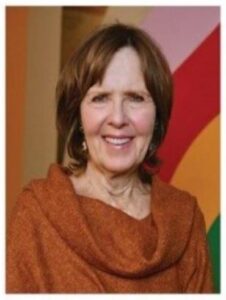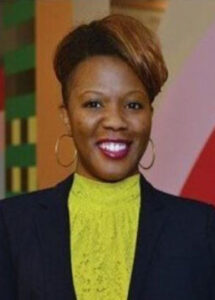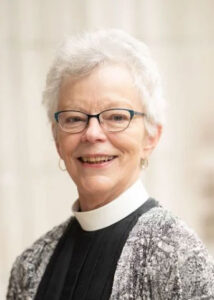
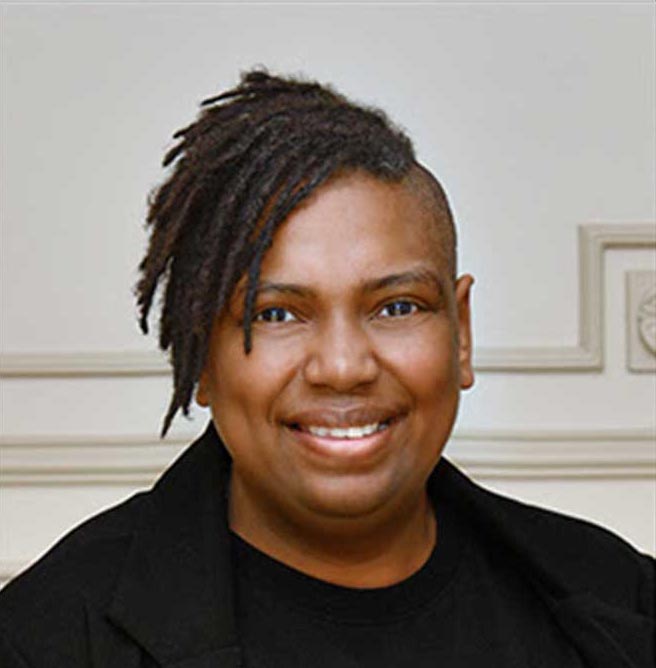
Phillis Lewis

WOMEN OF ACHIEVEMENT
2024

DETERMINATION
for a woman who solved a glaring problem despite
widespread inertia, apathy or ignorance around her:

Phillis Lewis

When she was six or seven years old, Phillis Lewis saw her mother repeatedly injured by her mother’s boyfriend. Phillis was herself hurt, by the same man. That childhood trauma led Phillis, a loud and proud bi-sexual woman, to dedicate her life to helping other victims of domestic violence and started her on the path to founding Love Doesn’t Hurt, an organization that provides support and assistance to members of the LGBTQ+ community who are victims of crime and sexual violence. 

In 2009 while completing a degree at the University of Memphis, Phillis interned with and was later hired by the Shelby County District Attorney’s Office to assist victims of domestic violence (DV) in working through the system, for justice and recovery.

Recovery and prevention each require many services not available from the DA’s office. Referrals are made to social service providers for help with related needs such as housing, transportation, and food.

In 2011 Phillis was assigned the case of a lesbian who was being abused by her wife. Phillis provided the victim with the resource list and was in regular contact to check progress and discuss problems. Then two weeks passed and Phillis heard nothing. She called and was appalled to discover that one of the agencies on the contact list was hostile and shaming toward the victim. Phillis wondered how many others in the LGBTQ+ community had similar experiences, with people who were supposed to provide help.

Determined to find out, on her lunchtime she began calling the listed providers and presenting herself as an LGBTQ+ victim. Phillis says 30% of the providers responded unacceptably. Phillis went to her supervisor who immediately removed those organizations from the list.

LGBTQ+ people are four times more likely to be victims of violent crime (including DV) and the abuser is often someone the victim knows well or with whom they have an intimate relationship. Phillis realized that there was no local program designed to provide support or to educate local agencies about the needs of this community. More was needed.  And in 2011 Phillis came up with the idea for Love Doesn’t Hurt.  

In data provided by local law enforcement she learned that in 2011 a total of 7,200 DV cases were reported. Of those only 213 were same sex relationships. The number seemed too low. She recognized the long-standing distrust of law enforcement. Furthermore, if law enforcement was called in at all, they could only report what they were told, not what they observed. Phillis wondered how to bridge this gap.

Her answer:  Convene an awareness event to increase cultural sensitivity. The first event included the Memphis Center for Reproductive Health, Hope House, Out Memphis, the Shelby County Sherrif’s Office and the Memphis Police Department.  It was all about building trust and Phillis worked tirelessly. 

In 2019, Love Doesn’t Hurt obtained a 501-C3 to become a stand-alone agency.  In 2021 Phillis took the plunge, quit her job, cashed in her retirement account and invested in educating herself about managing non-profits. She now works for Love Doesn’t Hurt, determined to dismantle hate and reduce violence while providing unwavering support and create a safe haven for victims in the LGBTQ community.

Over the years she has never wavered in her passion for this work. Energetic and enthusiastic, Phillis has led the Memphis Shelby County Domestic & Sexual Violence Council, chairs the Tennessee Coalition to End Domestic & Sexual Violence Inclusivity Committee, served as the LGBTQ+ representative for the Convening Council for the Memphis/Shelby County Homeless Consortium and is a leader in the DV task force led by the University of Memphis. 

Since that first event, reporting of DV in the LGBTQ community has increased by 256%. Phillis says this is not totally because of increased violence but because of increased awareness on the part of law enforcement and social services agencies and because victims now feel they can safely report crime and seek help. 

Today, March 3rd, 2024, would have been her mother’s 67th birthday. Today we honor Phillis Lewis, Gloria Fisher’s determined daughter.
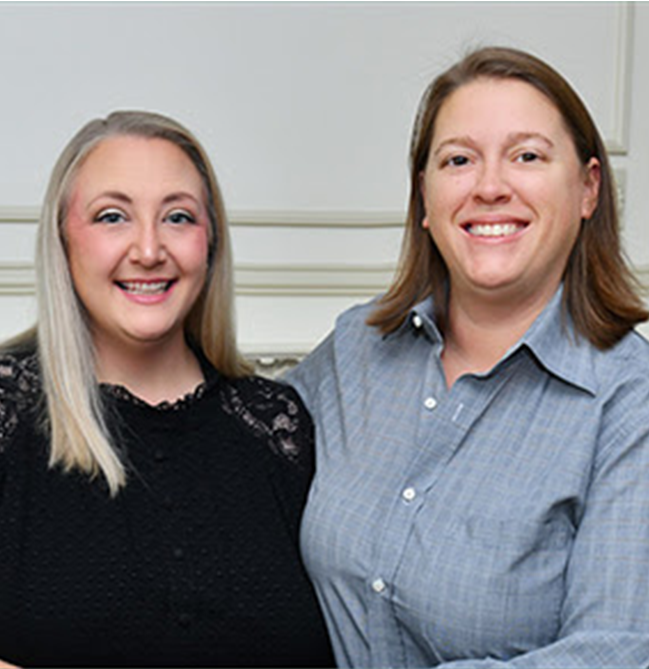
Jennifer Murry-Rodley and Vanessa Rodley

Jennifer Murry-Rodley (left) and Vanessa Rodley (right)
WOMEN OF ACHIEVEMENT
2024

COURAGE
for a woman who, facing active opposition,
backed an unpopular cause in which she deeply believed:

Jennifer Murry-Rodley and Vanessa Rodley

Who doesn’t love a parade? Vanessa Rodley and wife Jennifer Murry-Rodley certainly do! They watched from the sidewalk at their first Pride parade in Memphis. Then in 2010 they became volunteers. In 2023, with Vanessa as President of Memphis Pride and Jennifer as Vice-President, Pride events reached over 63,000 people, the largest attendance ever in the Mid-South.

This year’s Women of Achievement Courage Award is not for putting on a parade but rather for taking part in an uphill struggle, to be fought on two fronts, against the well-organized forces of hate and intolerance.

Ask yourself this question: Does it require more courage to express who you are on a public street, knowing that in the crowd are those who threaten you and everyone like you? Or to be a witness, to stand up for your right to speak freely and openly? We say both take equal amounts of courage.

First, their story: Vanessa, California born and raised, met Jennifer, a native Memphian, in 2001 when Vanessa moved to Memphis with a friend. In early 2002, they became a committed couple, a date they still celebrate. They soon moved to Los Angeles to be near Vanessa’s family. In 2007 they returned to Memphis, where they now live in Cooper-Young, near Jennifer’s childhood home.

Did I mention they were married in 2014?

They have much in common. Both grew up in homes where advocacy was expected. Vanessa’s grandparents, especially her grandmother, raised funds and sat on community boards. In Cooper-Young, Jennifer’s two moms were active in the PTA and with Girl Scouts.

Jennifer and Vanessa became active in Friends of George’s, a theatre company named after the beloved Memphis drag bar. As Mid-South Pride volunteers, they raised money and good will by serving plates of food and jello shots at local bars such as Dru’s and the Pumping Station.

When Pride established a board in 2012, Vanessa became Vice-President and Jennifer became Secretary. Pride, and the parade, thrived, But being out in Memphis attracts attention. From the beginning, threats were always in the air, but when the parade moved Downtown and attendance tripled, the threats escalated. Both remember 2019 especially; The Proud Boys, The Black Israelites, The Aryan Nation, and others openly hostile to the LGBTQ+ community. The Club Q mass shootings in Colorado in 2022 brought a whole new level of fear and anxiety.

Here’s what you don’t see but is behind the scenes at a Pride parade:

Security teams on high alert before and after Pride. Volunteers walking through the parade route, discussing what to do in worst-case scenarios. Check-ins throughout the day to make sure everyone is okay.

But what do you do when those who hate and fear you don’t hide in the shadows of the internet or anonymously in a crowd? In early 2023, Governor Bill Lee signed into law the Adult Entertainment Act as passed by the Tennessee Legislature. The intent was to make drag shows illegal. Friends of George’s (FOG) challenged the law and Jennifer became the face of that challenge.

Those defending the law deposed one witness: Jennifer. She recalls the questions were not about how she viewed her rights under the Constitution, but were crudely suggestive, invasive questions about her sexuality. She recalls the advice she was given; take a deep breath and a sip of water then be a witness for what is right.

Trump-appointed Federal Judge Thomas Parker overturned the law, saying: “Freedom of speech is not just about speech. It is also about the right to debate with fellow citizens on self-government, to discover the truth in the marketplace of ideas, to express one’s identity, and to realize self-fulfillment in a free society.” 

But with the victory came national attention; from Rolling Stone Magazine, TMZ, The New York Times, MSNBC. And there was a price. Jennifer was celebrated for leading the fight. And targeted, through social media. Their home address was revealed. Threatening letters arrived. Cameras were installed and for a time security vehicles were parked in the driveway. Yet they continued.

Besides their commitment to the LGBTQ community, both women have day jobs. Vanessa is operations manager for New Urban Media while Jennifer is a neo-natal ICU nurse at Baptist Women’s Hospital. They hope, In the future, to have children.

Early in their lives, Vanessa and Jennifer each learned to speak up. They have faced threats made in person, by mail and on social media. Yet they continue to courageously speak out for fairness, justice and human rights. And for that we honor them.

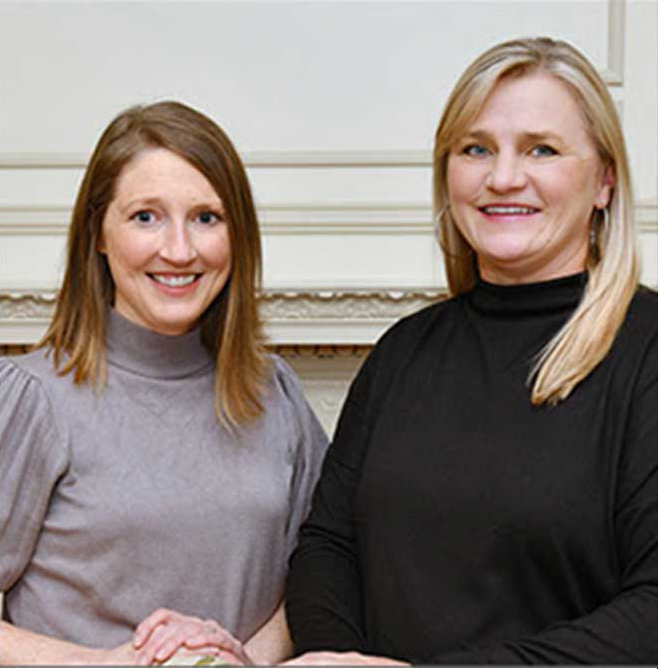
Amy Moses and Sara Lynn Johnson Fultz

Amy Moses (left) and Sara Lynn Johnson Fultz (right)
WOMEN OF ACHIEVEMENT
2024

VISION
for a woman whose sensitivity to women’s needs
led her to tremendous achievements for women:

Amy Moses and Sara Lynn Johnson Fultz

Menstrual cramps. Painful intercourse. Bowel incontinence. Urinary leakage. Vaginal dryness.

These are “below the belt” subjects that we just don’t talk about but that have a tremendous impact on our quality of life, from adolescence through menopause.

Freeing women from the misery, embarrassment and limitations of these problems is the vision and work of physical therapists Amy Moses and Sara Lynn Johnson Fultz. As co-founders and co-owners of MOJO Pelvic Health, as therapists, educators and advocates, they share a vision of a world where women can be pain-free and comfortable in their bodies throughout their lives.

Deeply sensitive to the stigma around issues involving the pelvic floor, they see that when women have issues that impact this part of their body, it affects their confidence, their independence, their dignity. They knew they had to create a safe space for patients to be seen, heard and understood.

Both women grew up in Mississippi and wandered far before a shared passion for lifelong women’s healthcare took hold. Sara Lynn spent several adventurous years in Alaska and returned to Memphis in 2010 where she saw in her practice dramatic relief from specialized physical therapy.

“I was treating someone who had bowel incontinence, a younger mother with four or five children. But she couldn’t go to any birthday party of her child for fear of something happening,” Sara Lynn said. “She came in and was crying because she had [finally] been able to go to a birthday party. Physical therapy makes a difference but this type impacts women in a way I had never experienced before.”

Similarly Amy, who traveled to Seattle for her residency, saw with her patients how imbalances in the pelvic floor impact literally every other part of the body. She also personally had fertility and pelvic floor issues that were resolved with pelvic PT, inspiring her to spend the rest of her life doing the same for others.

Sara Lynn and Amy met 10 years ago this year and almost joined up then but instead continued their independent pelvic health care work in the Memphis area. Five years later, in 2018, each on maternity leave with three-month-old babies, they met to talk and the vision of MOJO Pelvic Health was born. It opened in February 2019 and is now one of the largest woman-owned and operated pelvic health therapy groups in Tennessee and Mississippi. The practice began only with Amy and Sara Lynn and in five years has trained more than 30 physical therapists. MOJO has four core locations open to patients as well as therapists in six physicians’ offices.

They see how for centuries these problems have been blamed on aging, on being female, on having children. Menstrual periods shouldn’t be painful yet they are for many when issues in the pelvic floor could be the cause and could be addressed. Women are told to ignore their pain or cope with the difficulty and carry on.

“If this was any other part of the body,” Amy said, “this would be treated (likely by a PT!) with the goal of figuring out the why and solutions to resolve it. We should receive care even in our teen years or as children dealing with bladder issues or bowel issues so that this doesn’t become a lifelong issue.”

They spend lots of time helping patients realize that their issues can and should be addressed, that they are worth this care and do not have to just live with it because mom, grandmother or their aunts had the same thing and “made do.”

Awareness is urgently needed among aging women. The top two reasons women end up in nursing homes are urinary incontinence and bowel incontinence. Amy said, “Management of these issues causes us to lose independence, the comfort of our home, and impacts our caregivers and family members. This is devastating especially when care is available and should be offered as first line of treatment.”

Much more attention is needed about pelvic health in medical training. Amy and Sara Lynn both teach pelvic health curriculum – Amy at her alma mater, The University of Mississippi Medical Center in Jackson and Sara Lynn at hers, UTHSC in Memphis. They regularly welcome residents, nurses and physicians to their clinics to learn.

They are eager to talk about the benefits of pelvic health and therapy anytime, anywhere. They are working now on programs to increase accessibility for children and “pelvises with a penis,” Sara Lynn said.

Access to healthcare that restores comfort, dignity and independence to women and girls, across their lifespan, is the vision and work of Amy Moses and Sara Lynn Johnson Fultz, our 2024 Women of Achievement for Vision.

Jennifer Pepper

WOMEN OF ACHIEVEMENT
2023

HEROISM
for a woman whose heroic spirit was tested and
shown as a model to all in Shelby County and beyond:

Jennifer Pepper

As the United States Supreme Court prepared its opinion reversing a woman’s right to choose abortion and shuttering abortion clinics, who gets to work opening a new clinic to continue care and assure that pregnant persons have a choice?

Even with all this going against her, Jennifer Pepper does.

Jenn’s undaunted efforts to prepare for the Supreme Court ruling on abortion and her efforts to continue to provide for patients — from reorganizing and cross-training staff to finding, staffing and opening a new clinic in Illinois — drew attention from NBC, NPR and many others who told her story of heroic leadership.

Jenn’s deep commitment to women’s voices and bodily autonomy tracks right back to her “cool mom.” As a young single mother, she taught her daughter and son – and their friends — real names for their body parts, what they were for and how to be protected from HIV and pregnancy.

While Mom worked away from home, Jenn grew up taking care of the household and her younger brother in Alton, Illinois, developing leadership skills and problem solving. Her Catholic grandmothers took grand kids along to community projects like book drives and soup kitchens, instilling in Jenn the importance of helping people. But she also saw the impact family size had on people’s ability to live and thrive.

She says, “Women were who I saw taking care of stuff and I was always flabbergasted seeing my grandmas asking my grandpas for permission to do stuff….I didn’t really care for that.”

Jenn knew she needed straight As to get out of Alton and away to college. When a good-looking postcard from Rhodes College, five hours away in Memphis, Tenn., showed up senior year, she applied and got a community service scholarship.

At Rhodes she soon realized that nonprofits, not international business, would be her future. She interned at Planned Parenthood and honed activism skills producing Rhodes’ Vagina Monologs show and leading other women’s rights and women’s health programs.

One part-time job after graduation was at night at the Memphis Center for Reproductive Health as patient educator and abortion doula, then as full-time outreach coordinator for the agency founded by feminists in 1974. When longtime director Mary Frank retired, Jenn became interim director.

She found out she liked – and was good at – finance, management, the processes of running a nonprofit. When 2017 Woman of Achievement for Heroism Rebecca Terrell was hired as director, she made Jenn her deputy. With an expanding range of services, they rebranded the agency as CHOICES: Memphis Center for Reproductive Health. Jenn leaned into her knack for management and completed her MBA in 2014.

Shelby County government recruited her to run the Memphis Ryan White HIV programs, administering state and federal grant funds. But four years later, when Rebecca took her to lunch in May 2018 talking about the new birthing center CHOICES was building, Jenn eagerly returned as director of finance and operations.

With the birthing clinic, CHOICES became the first nonprofit, non-hospital health care provider in the country to offer both birth services and abortion care under one roof. CHOICES reproductive and sexual health care today covers perinatal and birth services, HIV testing and prevention, contraceptives, STI testing, gender-affirming care, IVF services and well-person exams.

In early 2020 Rebecca prepared to retire and asked Jenn to succeed her as president and CEO. The two worked closely with each other and the board for the transition on Jan. 1, 2021. Roe v. Wade guaranteeing the right to abortion was overturned on June 24, 2022.

“This is my third year,” Jenn says, “and it feels like 10 in lots of ways.”

To continue offering reproductive health care that was banned and made illegal in her own state last August, Jenn led CHOICES in opening a clinic in Carbondale, Illinois, one of the first and few abortion providers to open in a new state. It’s up the Amtrak line from Memphis or a 3 ½ -hour drive, in a state that passed a law in 2019 protecting the right to abortion. CHOICES’ new clinic saw its first patients on Oct. 11, 2022. It is the southernmost abortion clinic for most people across the Southeast.

Abortion is health care. Often life-saving care. Pregnancy complications should not become a possible death sentence. But Tennessee law forbids medical care in most circumstances and even bans terminations for raped, impregnated children.

Jenn Pepper stands firm, speaking out and working heroically to secure crucial health care that we all deserve.

Melanie Smith Taylor

WOMEN OF ACHIEVEMENT
2023

INITIATIVE
for a woman who seized the opportunity to use her talents and created her own future:

Melanie Smith Taylor

Olympic Gold medalist, equestrian Grand Prix triple crown winner, Show Jumping Hall of Fame member and sports commentator are just a few of Melanie Smith Taylor’s claims to fame.

While she wasn’t born on a horse, Melanie Smith might as well have been. Raised on the Hugh Frank Smith Horse & Pony Farm in Shelby County, Melanie was given her first pony by her grandfather at age three and got her first horse at 12.

With her mother, Rachael Smith, as her inspiration, Melanie started dreaming big when she was young. Rachael taught riding classes and early on it was Melanie’s job to ride the lead pony for other students to follow. She never used a saddle before age 12 because bareback gave her a closer connection with her horse. 

When Melanie’s family moved to Germantown in the 1950s, she became part of a horse community. Kids rode horses to school on the last day to pick up their report cards. The local candy store had a hitching post outside.

As she got older, Melanie began competing and winning, first at the Pony Club and then at the Germantown Charity Horse Show.

In the early 1970s Melanie took the initiative to move “back East,” the epicenter of equestrian sports. She began managing a horse farm in Connecticut and soon was managing several. The jobs gave her access to good horses and to all-important sponsors.

 Soon Melanie was competing at the highest level of show jumping — the Grand Prix category. In 1978, Melanie was named the American Grand Prix Association’s Lady Rider of the Year as well as the overall Rider of the Year. Melanie Smith had proven that women could perform on even terms with men, so the separate Lady Rider category was abolished.

Next, Melanie became one of only two riders ever to win the “Triple Crown of Show Jumping,” winning the American Invitational, the International Jumping Derby and the American Gold Cup, all on the same horse, Calypso. She was a member of the U. S. Equestrian team that won the gold medal  at the 1979 Pan American Games in Puerto Rico.

Melanie’s mother always urged her daughter to have the highest goals while enjoying the ride. One goal was to compete in the Olympics. She qualified for the American team in the 1980 games, however, the US boycotted that year. At the Alternate Olympics in Rotterdam, Melanie won an individual bronze medal. The U.S. Olympic committee named her Sportswoman of the Year.

In 1982 she won the Federation Equestrian International World Cup Show Jumping Championship in Sweden. Then in 1984 her long-held dream came true. She was a member of the U.S. team which won the gold for show jumping at the 1984 Olympics in Los Angeles. She still remembers the pride of being on the podium and hearing our national anthem. 

In 1987 Melanie retired from show jumping and returned to Tennessee. In 1989 she married Lee Taylor, an avid polo player and fellow horse lover, and moved to his family’s Wildwood Farm, breeding horses and running clinics. Lee brought her beloved horse Calypso to Wildwood where he lived peacefully until his death.

Though retired from competition, Melanie’s knowledge and her skill have kept her in demand. She has been a commentator on equestrian events including the Olympics for NBC, ESPN and other media ever since. She says the adrenaline rush of broadcasting live to a world-wide audience is a lot like making the winning jump. 

She has also served the horse world as a certified show judge, course designer and trainer of young riders.

And Melanie continues to take initiative to enhance the lives of others. Before his death in 2005,  Lee and Melanie gave a lot of thought to what should happen to Wildwood Farm. She worked to  add Wildwood to the National Register of Historic Places in 2017 and recently bequeathed the 350-acre property to the University of Tennessee, Martin, to be used for research, education, and service. Plans include vet-tech and agriculture programs and partnerships with local high schools. The farm will remain an oasis, intact in a part of the county that is rapidly becoming suburban.

How did one woman create such a life? Melanie says through focus and hard work, one step, or in this case, one jump, at a time.

Lori Spicer Robertson

WOMEN OF ACHIEVEMENT
2023

VISION
for a woman whose sensitivity to women’s needs led her to tremendous achievements for women:

Lori Spicer Robertson

Lori Spicer Robertson used to call herself a ‘hometown fleer” who chose to return after college and grad school to her hometown, determined to make a difference. Even as her career has climbed through major local and national organizations with an increasingly vibrant focus on workplace diversity and inclusion, Lori’s personal passion for supporting women and girls has resulted in creation of timely, empowering programs and events.

She earned her Bachelor’s in business at UT-Knoxville and a Master’s in communications at University of Florida. After a year in Washington invigorating the communication operation for the American Association of Colleges of Nursing, she came home in 2007 to accept the position as communications specialist for the Greater Memphis Chamber.

And she dove into community leadership: on the board for Dance Works, board communications co-chair for MPACT Memphis, on the Leadership Council for Young Women Philanthropists of the Women’s Foundation for a Greater Memphis. She was chapter and public relations chair for Memphis Urban League Young Professionals, and then its president, where she initiated a women’s summit.

In 2010 she became manager of Community Affairs & Engagement at The Regional Medical Center at Memphis, building relations with key community leaders and groups throughout the Mid-South.

With female alumnae from several high schools, Lori produced Brown Girls Dream, a mentoring program offering service projects and life lessons by women from many walks of life. She also hosted a Memphis Prom Closet with donated dresses and a giveaway party for juniors and seniors in several schools, complete with hair and makeup tips and guidance on how to dress for your size, make good choices and own your own power.

Lori joined First Horizon National Corp. as change leadership manager in 2013 and then became chief communications and engagement officer for United Way of the Mid-South in 2016. She led the way to form the Memphis iteration of Women United, created to “harness the power and dedication of women leaders to transform the Mid-South community through awareness, service and advocacy.”

Anxious for connection with other moms, she and her best friend Erika Matlock Conley organized The Gathering, a supper club where women could escape their isolation and share their experiences as wives and mothers. The supper club led to launching in 2020 of Wundher, a digital media and experiential production company designed to connect women and mothers to their joy. Lori says Wundher is the culmination of all of her pet projects: to connect people, to share storytelling that models resilience for other women and to foster mentorship.

This “fempowerment” platform features a membership community of women from all backgrounds, race and ages; a podcast and vlog; brand partnerships; and curated experiences. A lively website connects women to past and current local activities and voices from women around the country.

After a year of work Wundher’s launch came just as COVID struck so most activities became virtual, including a conference titled “Joymaker 2021: The Future of Women and Work” with a slate of national speakers that drew a couple thousand attendees.

 In-person events resumed last spring when 300 women in full finery gathered for the Mother of Wundher luncheon, giving every woman in the room an award for the often thankless journey of motherhood.

Wundher activities range from annual January vison-boarding partay to #MOMversations on race featuring a range of expert voices to evening cocktail gatherings with special speakers in support of local nonprofits and a march/rally in Overton Park in support of black children after George Floyd’s death.

Lori served Saks Fifth Avenue as vice president of diversity, equity and inclusion from September 2020 to February 2022. Sensitive to the weight and trauma that DEI officers carry, not only for their employees, but themselves, Lori initiated in late 2021 an annual DEI Summit to support self-care and wellness among DEI professionals.

She organized the second summit in December 2022 after moving in October to St. Jude Children’s Research Hospital as vice president and chief diversity, equity and inclusion officer.

In her 2023 Linked In profile, Lori lists these titles:

MOM | VP, Chief DEI Officer | Founder, The DEI Collective & Wundher | Experience Curator | Corporate Collaborator | Speaker/Facilitator | Board Director | Career Aligner | Writer | Multihyphenate

The record of her professional and civic life is a litany of energetic, creative, passionate leadership to help women and girls live their fullest, most equitable and joyous life. Lori lives the Vision definition, constantly finding timely, new ways to respond to women’s needs with sensitivity and purpose.

Anne Stone Carriere

Women of Achievement
2023

COURAGE
for a woman who, facing active opposition,
backed an unpopular cause in which she deeply believed:

Anne Stone Carriere

We honor the Rev. Anne Stone Carriere as the first woman to be ordained a priest in the West Tennessee Diocese of the Episcopal Church. During a time of doctrinal upheaval, she pursued her calling in life with quiet courage and broke ground for women in the clergy for generations to come.

Anne was raised Catholic but at 16 she left to seek a new church for herself. A year later she found her home at Grace St. Luke’s.

Anne began her adult life as many women do. First, education. She earned a degree from Vanderbilt University and began teaching. After marriage and the birth of two daughters, she became a full-time mother and active volunteer.  But she realized something was missing.

In 1976, with friends, she attended a workshop on “What do I want to be when I grow up?”  Aptitude tests showed that Anne would make a great bartender or house mother. Clearly not right, but the process got her thinking. What might give her life meaning? She realized the answer had been there all along: her church. 

Her timing seemed ideal. The General Convention of the Episcopal Church had approved the ordination of women to the priesthood in 1976 and began ordaining women in 1977.

When Anne spoke to her rector, no Episcopalian woman had ever been ordained a parish priest in the state of Tennessee. “If you want to be a priest, you’ll have to talk to the bishop,” he said.  Anne did just that and the bishop approved. 

So Anne’s trailblazing road to the priesthood began. Despite the opportunity there were familiar roadblocks ahead and the process took five years.

Anne wanted to attend the School of Theology at the University of the South in Sewanee, TN.  But while the bishop was progressive, he was also paternalistic and told her to remain in Memphis to support her husband’s career and not disrupt her family. Initially her husband wasn’t so sure either. How would he feel in a business suit with a wife in a collar? He got over it. But as Anne points out, had she been a man, it would be assumed that the family would move.

Instead of going to Sewanee, she read for the orders under tutors while earning a Masters of Divinity from Memphis Theological Seminary. In that wonderful diverse environment, the few women students created their own long-lasting support system.

Anne was ordained deacon in 1981 by West Tennessee Bishop Fred Gates. Grace-St. Luke’s was packed with Memphis clergy, friends and people who read about it in the paper.

The Episcopal Church had gone centuries without ordaining women and there were plenty who still didn’t approve. To lessen controversy, Anne was assigned to her home church.

In 1982, Anne was ready for ordination to the priesthood. Three weeks before, with invitations printed, Bishop of Tennessee William Sanders phoned. He had heard a rumor that if ordained, her husband would divorce her. Hold the invitations! Sanders came to Memphis to meet with the couple and again, the ordination was on. Bishop Gates refused to officiate so Bishop Sanders returned for the service.

Anne served at Grace-St. Luke’s for nine years in a variety of supporting roles.

Ready for more responsibility, she asked that her name be put in for consideration as rector. She heard later the approving bishop thought she would never be called, but he was wrong. Anne answered the call of The Church of the Holy Apostles in Hickory Hills, becoming the first female priest to serve as rector in the Diocese of West Tennessee.

The parish was struggling financially and with shrinking membership. Anne brought in young families and expanded membership. She stayed seven years. That last year Anne worked to create an open affirming environment, knowing that small acts are the beginning of big changes. 

In 1996, Anne resigned, her husband retired and they moved to Arkansas where she assisted at St. Andrews Episcopal in Mountain Home. She became their rector in 1998. She retired in 2003 to travel the country in an RV with her husband.

After his death in 2016, she returned to Memphis and to Grace-St. Luke’s, the church that supported her on her journey to the priesthood.    

Anne has mentored many women. While more are enrolled in seminary than when Anne was attending, she notes there is still a very real glass ceiling; that women graduates are much more likely to be in associate roles than leading congregations. More barriers remain to be broken and Anne’s courage lights the way.

Barbara Boucher

Barbara Boucher
WOMEN OF ACHIEVEMENT
2023

DETERMINATION
for a woman who solved a glaring problem despite widespread inertia, apathy or ignorance around her:

Barbara Boucher

Many people in our community are hungry every single day.  And that’s not okay with Barbara Boucher.

Some statistics report that 19% of our local population suffers from food insecurity. Some say that 116,000 children and their families fall into that category. A recent study showed Memphis as number three in the nation for food insecure seniors. Whatever the stats, that’s way too many.

A long-time volunteer in food ministries for the Church of the Holy Communion, in 2010 Barb Boucher began helping prepare food for a monthly Sunday for the More than a Meal program at Grace St. Luke’s Episcopal. In 2012, she inherited the position of team leader. Barbara and her team haven’t missed a Sunday since. 

And that was just the beginning.

In 2019, Barb began cooking for women surviving life on the streets and overcoming addiction through the Lisieux Community. She included with each summer meal frozen cloths to cool the neck as there’s no air-conditioning on the street.  

In 2020 Covid struck and food ministries shut down. Constance Abbey, an intentional community working to meet immediate needs of the unhoused population near downtown, phoned. “Our clients are hungry,” they said. So Barb went into action. First, she personally prepared 300 sack lunches. Next, she developed Covid procedures to allow volunteers to safely prepare and deliver 80 – 100 sack lunches daily along with hot meals for dinner. This program continued until other food ministries re-opened in June 2021.   She also continued cooking for Lisieux.

 When community lockdown ended and other food ministries re-opened in June 2021, Barb’s individual work at Lisieux became part of her long-standing work through Church of the Holy Communion’s food ministry now called Recover Food, Feed Hope. Each aspect of the ministry draws different volunteers. Currently more 65 volunteers assist and the number is steadily growing.

Their work is supported by donations of cash and food. Individuals, faith groups, businesses all kick in. And since 2020, through contact with Clean Memphis, gleaning has had a huge impact.

In the present day, this biblical practice means recovering otherwise wasted food and feeding the hungry. Barb and team initially used gleaning for meals for Constance Abbey. It is now an essential part of the ongoing network.

In the summer of 2021 over 7,000 pounds of produce were collected twice a week at the Agricenter Farmer’s Market by a small crew of gleaners from Temple Israel and Beth Sholom synagogues. After Jewish Family Services provides for their community, the remainder comes to Barb’s team.

This produce can’t wait. 

Depending on the product, they decide what to do next. First chop, then cook or freeze. Picture crates and bushels of waiting, wilting, warming produce. By the end of last season, everyone had blisters from peeling and was tired of tomatoes, cantaloupe, and okra!

Now that word is out, grocery stores, restaurants, college cafeterias and sometimes even large private weddings and parties send food to the gleaners. No food is turned down, even on the weekend. Exotic spice donations have led to culinary research and creative recipes. Calls are made and food is delivered.

The standard for each meal is that it must be delicious enough to serve to your own family. A favorite comment from one client is that Barb’s banana pudding tastes as good as her mama’s, a high compliment, indeed.

In addition to prep work and delivery, Barb’s efforts include recruiting and scheduling both individuals and institutions to help.  Sometimes it’s through people she knows and sometimes it’s cold calls but clearly her tactics work She now has a large interfaith network striving to end hunger. And instead of making calls, she gets calls asking how to help.

How did Barb choose this volunteer activity?  She says that love of cooking is her gift from God.  The fifth of six siblings of a working mother, she was in charge of preparing whatever was left out each morning for their evening meal.  When her three sons were young and active in youth groups, she loved cooking for them and their friends .

What else does Barbara do?  She loves to bake and regularly makes birthday cakes for people in hospice. And of course, she spends time with her precious grandchildren.  Her intention is to make sure that everyone has enough to eat.  If it were up to the determined Barbara Boucher, no one would go hungry.

Beverly Robertson

WOMEN OF ACHIEVEMENT
2023

STEADFASTNESS
for a woman with a lifetime of achievement:

Beverly Robertson

Beverly Robertson has dedicated her life to using positive, strategic power of communicating to grow historic local enterprises including, most recently, as the first woman and first African-American CEO and president of the Greater Memphis Chamber of Commerce.

Beverly grew up in Memphis, around Orange Mound, watching the Zippin Pippin roller coaster at Libertyland flash by on the horizon but not allowed to ride it except on Tuesdays.

She graduated from Melrose High and Memphis State. She used her special education major to teach for three years while also working at night for Holiday Inn Worldwide, one of the leading companies in Memphis and the nation at that time.

At Holiday Inn she completed an MBA-caliber executive leadership program offered by the Wharton School of Business and began to move through various areas of the corporation in 19 years, including a stint in New York City.

Beverly says, “I was always adventurous and never thought there was anything I couldn’t do – maybe brain surgery! But I never for a moment thought I couldn’t learn how to do something and do it extremely well.”

She was director of communications when the need to relocate came up after Holiday Inn was sold. She instead joined her husband Howard to transform his solo advertising business into TrusT Marketing in 1992. They were in their late 30s.

At this same time, the National Civil Rights Museum board was looking for its first director ahead of opening. Beverly was asked to lead the museum but said no and concentrated on getting Trust up and running.

Beverly was responsible for landing national accounts, such as the Promus Companies, Holiday Inn Worldwide, Midas International, Merrill Lynch, plus local clients including Memphis and Shelby County governments and Memphis Area Transit Authority.

That’s where she was when the founders of the six-year-old National Civil Rights Museum needed an interim executive director and asked her to step in “just for a while.” She agreed and soon the board asked her to lead the museum permanently.

Her tenure there is storied: she raised $43 million, which included the completion of an expansion of the Museum ($11 million) and a capital and endowment campaign ($32 million). In 2010, NCRM received recognition as one of the top ten national treasures by USA Today. 

Beverly elevated the NCRM profile across the world. The local museum moved strategically to become an internationally important facility. Beverly grew the Freedom Awards into a global event with international stars and Hollywood celebrities on her list of invitees. A near-legendary story is told about her effort to bring South African president Nelson Mandela to Memphis — by flying there to personally invite him!

“Getting to know and walk beside some of the greatest human rights leaders in the world is no small act,” she says, “and that an institution in Memphis attracted the attention and respect of  so many global leaders.”

She continued that leadership – as well as a long list of other community leadership roles – for 16 years before announcing her retirement in 2014.

She returned to TrusT Marketing and various community projects – but leaders of the Greater Memphis Chamber turned to her after the tragic murder of chamber CEO and president Phil Trenary. Again she agreed to step in “for a while” as interim leader of the traumatized staff.

She was the first African American and first woman in the position. She met individually with each Chamber employee and set out to bring neighborhood concerns closer to the government and business cornerstones of the Chamber.

In 2019 she was hired to serve as CEO and president of the Chamber. She was at the helm as COVID struck Memphis’ economy, workplaces and households and she was there when the Eliza Fletcher murder and a violent shooting spree across the city traumatized Memphis in September 2022. She made sure the mayor and police chief knew business leaders would engage toward positive change for all, having already fostered efforts after the George Floyd protests to align activists’ concerns and business goals toward a more diverse and trained workforce, a living wage, equitable contracting for minority- and women-owned businesses and community reinvestment and transportation,

Beverly left the Chamber at the end of last year, returning to TrusT Marketing, still engaged, ready to drive transformational change for her city’s future.

In 2020 Beverly joined Women of Achievement honorees Marilou Awiakta, Lois DeBerry and Maxine Smith on USA Today’s list of Tennessee’s Women of the Century. Today we honor her decades of leadership and devotion to the people of Memphis with the 2023 Women of Achievement award for Steadfastness.

Elizabeth Fisher Johnson and Lillian Wyckoff Johnson

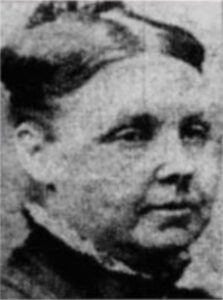
Elizabeth Fisher Johnson
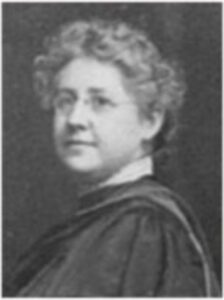
Lillian Wyckoff Johnson
WOMEN OF ACHIEVEMENT
2023

HERITAGE
for women whose achievements still enrich our lives:

Elizabeth Fisher Johnson  (1835-1883) and Lillian Wyckoff Johnson (1864-1956)

When Mr. Johnson’s daughter, Miss Lillian Wyckoff Johnson, returned to Memphis from school in 1887, she became a teacher in the Hope Night School.  When her father moved away from the city she was not only principal of the school but, with her father’s enthusiasm for the success of the institution that had become an expensive one to run, this brave young teacher collected from Memphis merchants $1,500 every year for its maintenance till it became one of the public schools in 1892. She taught in Memphis at the Clara Conway Institute for Girls and also the Hope Night School for working students, beginning as a teacher there and becoming principal and business manager,  finally making it part of the Memphis city school system.  The school was a pioneering effort to give working people better lives. 

This mother-daughter duo were leading pioneer activists of their generations in Memphis. 

Elizabeth Fisher Johnson, born to a prominent family and married to a wealthy merchant, believed that women should be public activists as were men in a time when women were supposed to be seen and not heard. 

In the 1870’s she founded the Woman’s Christian Association, the first city-wide group of women reformers, which worked to improve the lives of women and children in Memphis. Elected first president, she served until her death in 1883. The organization pioneered what later would be called “social housekeeping,” the idea that women had to work to clean up society as well as the home. 

They started projects to provide immediate relief but also to educate women with skills for paying jobs. Their most daring project, and the most controversial, was trying to rehabilitate prostitutes by teaching them employable skills such as sewing and domestic work at a time when respectable women and men despised them. 

She was also a key leader in bringing the Women’s Christian Temperance Union (WCTU) to Tennessee. In the 19th century, WCTU members saw themselves fighting the sin of alcohol, but also as fighters against domestic violence and the break-up of homes, because prohibiting alcohol was seen as key to solving these problems. You could say it was the largest domestic violence organization of the 19th century.

 Elizabeth Johnson saw the WCTU as a way to help women and families and to change society. Johnson became the first state president, but died at the age of 47, only six months after being elected.

Elizabeth Fisher Johnson had eight children, including her daughter, Lillian Johnson, who became an activist in education for women and the poor. 

Lillian pioneered in higher education for women, graduating from the University of Michigan with a B.A., then doing graduate studies in Germany and the Sorbonne in France. She received her Ph.D. at Cornell University in 1902, all at a time when these academic achievements were almost unheard of for women. 

She taught in Memphis at the Clara Conway Institute for Girls and at the Hope Night School for working students, beginning as a teacher there and becoming principal and business manager. She collected $1,500 from Memphis merchants each year for Hope’s maintenance until finally making it part of the Memphis city school system. The school was a pioneering effort to give working people better lives.

Lillian taught at Vassar College for four years and while there laid the foundation for the Southern Association of College Women, started in 1903. In 1904 she became president of Western College for Women in Oxford, Ohio, a position she held until 1908. Then she returned to Memphis and taught history at what was later Central High School.

As chair of the Education Committee of the Tennessee Federation of Women’s Clubs and the Nineteenth Century Club, she was one of three women seen as the primary leaders in getting the West Tennessee Normal School (now the University of Memphis) established in 1912. Johnson saw this as an opportunity for women to get a higher education and become teachers, as most Normal School students were women. 

She became interested in rural education and moved to Monteagle, in Grundy County, TN, in 1915, one of the 10 poorest counties in the nation. For the next 17 years she worked to educate and make life better for south Appalachian farming families. After failing to establish a cooperative of her own, she donated her house and property in Summerfield in 1932 to Myles Horton who began the Highlander Folk School there with a policy of being an integrated institution from the time it opened. The school became known for its activism in training leaders in labor organizing and civil rights.

Lillian later retired to Florida, where she cofounded the Bradenton Community Welfare Council, made up of African-American and white women’s organizations; it established an African-American Youth Center and worked on other interracial projects. 

Lillian Wycoff Johnson died there in 1956 at the age of 96, having never married.