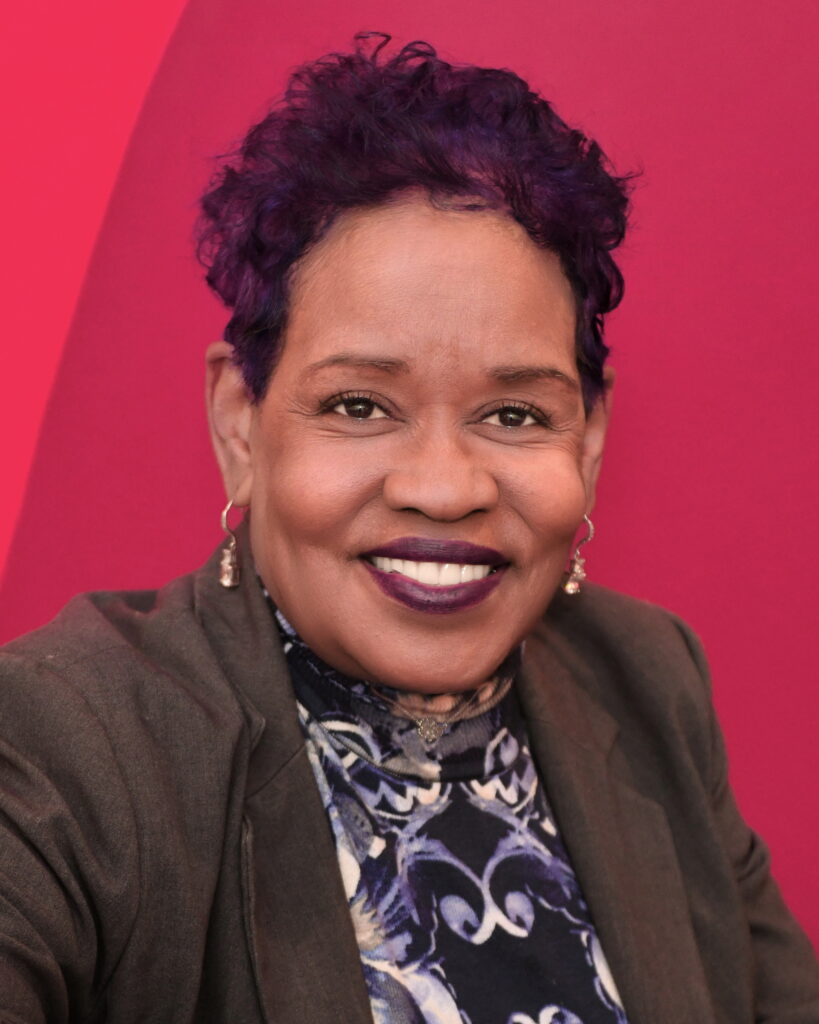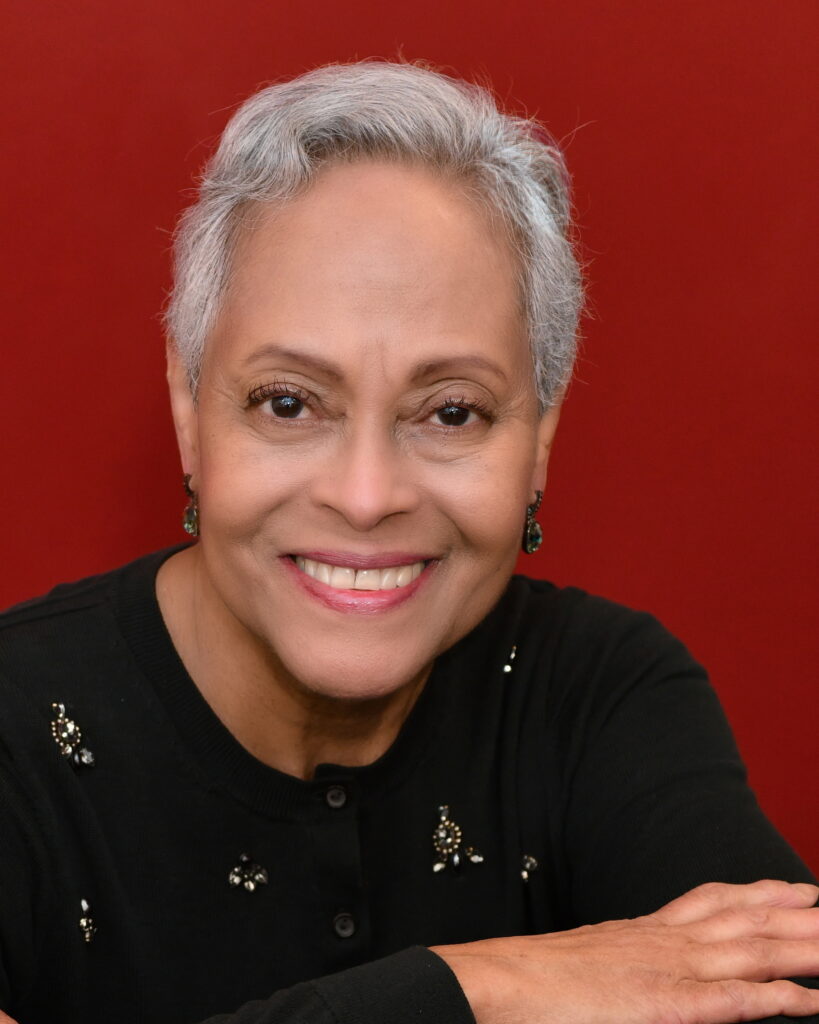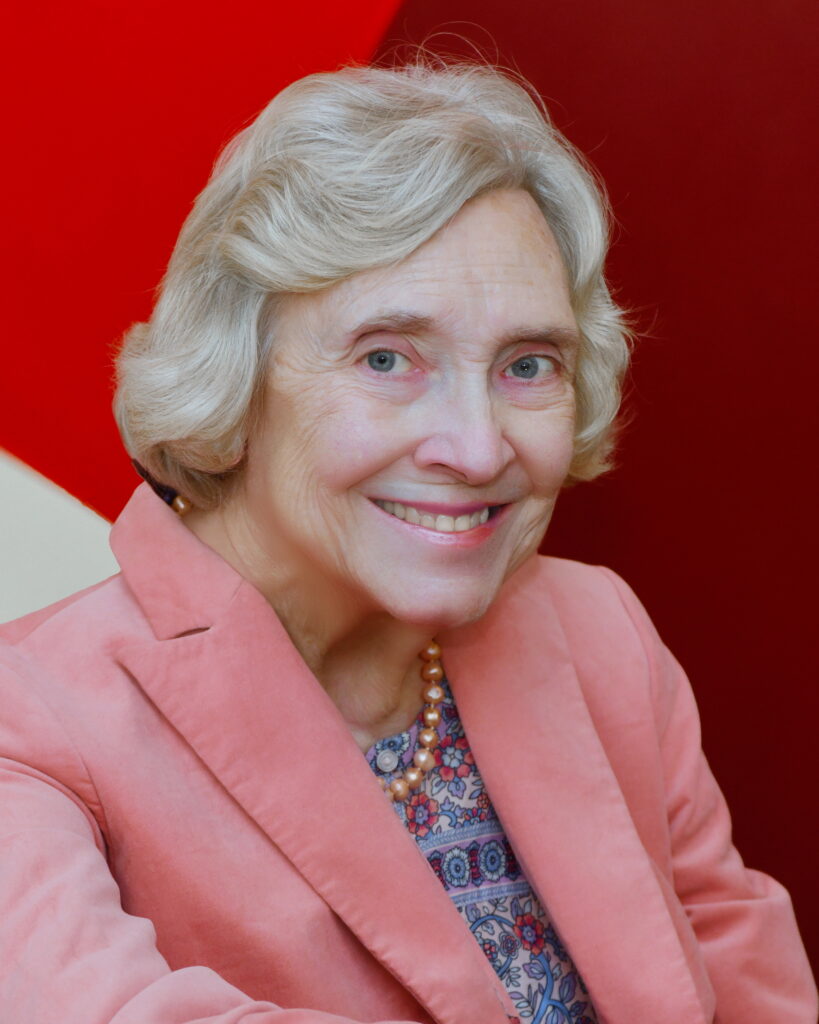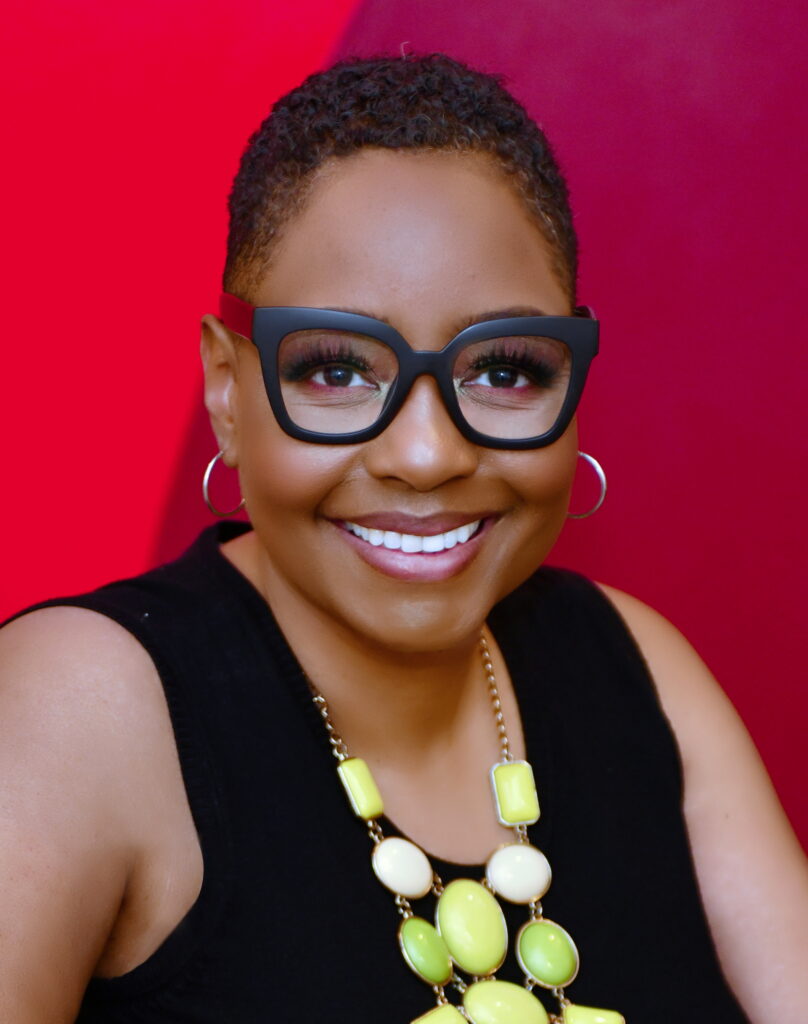
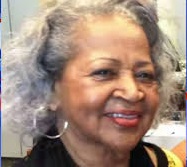
Joyce Blackmon

WOMEN OF ACHIEVEMENT
2025

HERITAGE
for women whose achievements still enrich our lives:

Joyce Blackmon (1937-2019)

This year’s Women of Achievement Heritage award goes to a ceiling-breaker, teacher, counselor, mentor and, especially, a leader: Joyce Blackmon.

When she died in 2019 at the age of eighty-two, The Commercial Appeal headline read ‘MLGW Trailblazer with A Big Heart.’ From 1979 to 1986 Joyce was a Vice President of MLGW, the first African American and first woman to hold that position. But that does not begin to describe Joyce Blackmon’s impact on our community.

A native Memphian, she received both bachelor’s and master’s degrees from the University of Memphis and began work as a teacher in the Memphis City Schools.  Later Joyce advanced to become a guidance counselor.

“She truly loved her students,” Tajuan Stout-Mitchell, one of those students and a former City Council member, told the Tri-State Defender. “Ms. Blackmon encouraged them so much that they began to believe that they could do impossible things.”

George Tillman, Jr., benefitted from her guidance through much of his life, starting with encouragement to attend Fisk University. A close friend of her son Lawrence Blackmon, Jr., Tillman returned to Memphis and pursued a career as a filmmaker. His latest project, The Lucky Eleven, is a documentary about eleven members of the Southside High School football team of 1973. Joyce Blackmon was their guidance counselor and appears in the film.

“Had it not been for her, there would be no Lucky Eleven,” he says. She was determined that those young men succeed. Knowing they needed more than athletic skill; she invited all eleven to her home on Saturdays to study for a college admissions test. 

“She was a magnificent woman, her grace, her poise,” Tillman recalls. “She never raised her voice. She would talk to you and you were going to do what she said. The results that came from it were incredible,” he says. “She saw to it that all of us went to Fisk University to be educated. She lived to see us all become good men.” 

Passionate about making Memphis a better city, Joyce engaged in numerous organizations, from the Memphis chapter of the NAACP to a term as President of Memphis in May International Festival.  

And Joyce was one of those who stepped up in Memphis’ darkest hour. After the assassination of Dr. Martin Luther King, Jr., attorney and activist Jocelyn Wurzburg, Joyce and others formed the Panel of American Women. Representing women from all parts of city life, they were determined to start a conversation about the elephant in the room: racism.

Our city was infected with so much racism that it permeated our lives,” Wurzburg says. “Before you can help people understand, you have to work on attitudes, to wake up and understand how prejudice works.” 

The group began speaking to anyone who would listen, from civic groups to churches, trying to open a door to the lives of other people to reveal how they encountered discrimination, whether due to housing and employment, race, religious belief or culture. Joyce Blackmon was ideal for the role.

“She could bridge the gap,” Jocie said. “She was smart and competent, and we were able to use her to great advantage to get things done.” Over a decade’s time the Panel made hundreds of presentations to thousands of Memphians. Jocie and Joyce became friends. “She was fun. She made you laugh. I adored her.”

There is no greater legacy than such a lifetime of commitment. Women of Achievement is proud to recognize Joyce Blackmon and add her story of service and leadership to our archive.

Lauren Williams-Batiste

WOMEN OF ACHIEVEMENT
2025

COURAGE
for a woman who, facing active opposition,
backed an unpopular cause in which she deeply believed:

Lauren Williams-Batiste

Lauren Williams-Batiste believes in environmental justice.  And she believes that people have power.  Those beliefs plus her hard work stopped a sawmill from being built in an historic north Memphis neighborhood

When plans were announced for industrial development on a vacant ten-acre lot at Chelsea and Watkins, people got worried. But many in the traditionally low-income area felt they had no control. As one resident said, “This wouldn’t be happening in Central Gardens.”

Concerns about the development were brought to the Vollintine-Evergreen Neighborhood Association board.  They turned to Lauren, who served as VECA’s Community Engagement chair, and she plunged in.

At issue was a proposal to build a facility that would turn wood waste into usable lumber and compost.  With it would come only ten new jobs. The plan had been put together by two non-profit groups and there were lots of questions that could not be readily answered by engineers, the City of Memphis or by the non-profits.  Yet work on the site began prior to the needed approval.

Residents didn’t want more industrial development. They worried that air pollutants from the proposed business would lead to health problems and that noise from the facility itself and from heavy truck traffic would hurt the quality of daily life. Additionally, the site was near the already contaminated Cypress Creek.

A long-time organizer, Lauren knew what to do. She convened community meetings, planned group trips to City Council to speak out, gathered groups to knock on doors, visited community association meetings, created surveys and petitions and wrote op-ed columns.  One city council member strongly supported the plan.  Another was opposed and worked equally hard to stop it.

While some community groups gave their support to stopping the project, others were indifferent so Lauren reached deeper.  Environmental justice groups Young Gifted and Green as well as MCAP (Memphis Communities Against Pollution) added their voices. 

Though the fight was intense, Lauren did not give up.  When she needed courage, she held tightly to a vision of two homeowners, both women in their 80s, who had joined the fight.  Each had lived in the neighborhood for over 50 years.  Neither had ever had an email account but got them for the zoning battle.  They learned to Zoom.  They found rides to meetings.  They wrote letters.  They made phone calls.  They would not give up.  And neither would Lauren. 

Finally in April, 2024, the plan was withdrawn prior to a City Council vote.  Should it ever return to the agenda, the community vows to renew the fight.

Lauren is executive director of In Our Names Network, a national group of organizations, campaigns and individuals striving to end police violence against Black women, girls, trans and gender nonconforming people.  She operates Elle’s Elixirs, her online business which sells CBD soaps, teas and soaks.  She was doing both while organizing this resistance.

Lauren’s passion for justice comes naturally.  During the Jim Crow era, her great grandmother, Ada Johnson, took the hands of her two young children and walked away from a Mississippi plantation.  Reaching North Memphis, she started her own business and founded a political action fund.  Lauren’s grandparents became civil rights activists. Lauren says that advocacy, policy change, and social justice are family values.  And whenever she’s feeling discouraged, she remembers those who came before and faced insurmountable obstacles and says, “We don’t need to complain one bit.”

A native Memphian, Lauren left to obtain a bachelors degree from Tennessee State University in Nashville.  She taught school several years in Baton Rouge, her husband Donald Batiste’s hometown, then in Albany, New York, where they moved for his work and where Lauren completed a master’s degree.  But she always wanted to come home to Memphis and in 2010 the family moved back. 

Lauren is quick to point out that she did not stop the proposed sawmill alone.  But as her nominator points out, “Lauren united the community and was the heart behind this movement that preserved the peace in this historic neighborhood.”

And for that courage, Women of Achievement salutes Lauren Williams-Batiste.

Kayla Gore

WOMEN OF ACHIEVEMENT
2025

DETERMINATION
for a woman who solved a glaring problem despite
widespread inertia, apathy or ignorance around her:

Kayla Gore

Kayla Gore puts the “T” first in the acronym LGBTQ, noting the priority she places on saving the lives of transgender people. Beneath her calm exterior lies the heart of a tireless, determined and effective advocate for transgender people throughout the Mid-South.

A Memphis native, Kayla earned degrees in business administration and sociology at Southwest Tennessee Community College. After moving to Phoenix for a job that did not materialize, she found herself homeless. But she learned from the experience. During eight months of living on the street, Kayla took careful note of what services were available – and what were not.

In Phoenix, she was going through another life transition – to her true self as a transgender woman. When Kayla returned to Memphis, she found her footing and her vocation as an organizer with the Mid-South Peace and Justice Center’s Homeless Organizing for Power and Equality (HOPE) program. From there, she worked remotely for the Transgender Law Center, the nation’s largest trans-led advocacy organization, and then for the Transgender Strategy Center, where she learned how other cities tackled issues such as homelessness. Kayla also worked for three years at OUTMemphis, providing services to transgender community members.

Despite her successes, the realities of life for transgender folks in Memphis continued to weigh on Kayla. Kayla knew firsthand that transgender folks were more likely to be poor, homeless and vulnerable. According to the National LGBTQ Task Force, 41% of Black transgender people have experienced homelessness – more than five times the rate of the general US population. The same study noted that 34% of Black transgender people live in extreme poverty – eight times that of the general US population.

A study by the Williams Institute reported that transgender people were eight times as likely to be homeless compared with cisgender adults. And transgender people often experience extreme violence. According to the Human Rights Campaign, in 2016 at least 21 transgender people were murdered in the US. Almost 95% of them were people of color and 85% were women.

Those grim statistics include several Memphians.

Kayla knew that a safe home and community support were key for Black transgender women to survive and thrive in Memphis. In 2016, using her own home, Kayla opened My Sistah’s House to provide temporary shelter for a few transgender individuals. Kayla continued to network and fundraise, to provide food, “survival kits”, bail funds, emergency housing, HIV testing, and advocacy. But Kayla saw the need for more, and knew the key to financial stability lay in home ownership,

In 2020, Kayla and My Sistah’s House raised more than half a million dollars primarily through grassroots fundraising – during the pandemic — to embark on an ambitious plan to build 20 “tiny homes” on a 30 acre plot of land in Memphis and give those homes to transgender community members. Her first houses were built on the South Memphis Street where she grew up – a true “full circle” moment.

As of 2024, Kayla reports, “We have successfully developed eight homes, including one fully accessible for individuals with disabilities. Two additional homes are currently under construction, one of which will be ADA-compliant, bringing the total number of completed homes to ten within two years. Our goal is to continue this momentum and complete the remaining ten homes while committing to replicating this effort in other cities across the south.”

In addition, Kayla served as lead plaintiff in a case filed by Lambda Legal against the State of Tennessee to allow transgender Tennesseans the right to change the gender marker on their birth certificates. And in this time of frightening political campaigns targeting transgender people, Kayla continues to be a passionate advocate, speaking out and fighting threats to the lives and well-being of transgender folks in Tennessee.

Of her work, Kayla has said, “I feel like I’m Harriet Tubman. I feel like I’m giving people a pathway to success in life. Harriet Tubman had to do her work in secrecy. We’re doin’ it out loud and proud.”

And for that Women of Achievement salutes Kayla Gore.

Gwendolyn Turner

WOMEN OF ACHIEVEMENT
2025

HEROISM
for a woman whose heroic spirit was tested and
shown as a model to all in Shelby County and beyond:

Gwendolyn Turner

Gwendolyn Turner was a talented singer who endured terror, injuries, degradation and pain for 22 years at the hands of her partner, a well-known pastor. She was convinced she could not tell anyone about his behavior and be believed because of his fame and position. They travelled, preaching and singing, and he followed episodes of extreme abuse with lavish gifts and trips.

But finally, at age 44, Gwen spoke out, left him and started over – and she hasn’t stopped speaking since. Gwen is determined to help other women, heroically telling her complete story of rape, sexual abuse, beatings, abortion and permanent injury.

Gwen grew up in South Memphis and met her future partner at age 17.  He was 9 years older. They were friends, he was like a big brother and they began dating when she was in college.

She fell in love. She thought his fixation on her – phoning five times a day and otherwise basically  stalking her – just meant she was very special to him. Her parents had a 60-year, respectful marriage. Gwen knew none of the red flags that signal danger in a relationship.

They lived together and she began to help raise his three children from a prior marriage. He was rich. She shopped in the best stores – but eventually she realized he bought clothes that he wanted her to wear. She was only allowed to do what he permitted her to do.

Verbal abuse started, sudden anger, constant badgering about where she was and what was she doing – even in the bathroom! He always apologized and she still thought he was her God-send.

His first physical assault came after six years. He accused her of being with someone else after a church concert. He kicked, slapped, tore off her clothes. And he raped her.

For two weeks he apologized and wept and blamed it on being drunk or high and stressed with his work as a preacher. Things settled again but this began a chaotic pattern as his drinking and drug use became more frequent. He would fly into a rage. He forced sexually perverse behavior and even forced her to have an abortion. He said that a pregnancy would not be good for their public testimony.

Gwen blamed herself, that she wasn’t doing enough. She loved him as a teenager, loved him before he hurt her and kept thinking she could please him enough to make the abuse stop. She left him 10 times but always went back.

They were together for 22 years. No one knew. His nickname was “Gentle Giant.”

But finally he slapped her in his church study, ordering her not to go visit her hospitalized mother. She told him: “If you’ll slap me in the Lord’s house, you’ll kill me in your house.”

She packed, told him she was leaving for good, listened to his torrent of ugly words — and drove away leaving behind clothes, diamonds, minks, all of it. She was 44.

She has gone from victim to survivor to coach.

Gwen has become a leading counselor and advocate for victims/survivors of intimate partner violence. She has worked for the Memphis Shelby County Family Safety Center, the county Crime Victims and Rape Crisis Center, the city’s housing department DV unit and even the Shelby County District Attorney’s office.

She is shelter coordinator now for the YWCA of Greater Memphis which operates the city’s primary emergency shelter dedicated to victims of domestic violence. She juggles funding shortfalls, lack of space and shortage of qualified personnel all while dealing with traumatized women and children who often arrive with only the clothes on their backs.

Gwen readily speaks to civic organizations, church groups, students, law enforcement, news media and others to raise understanding of the warning signs of intimate partner violence. She urges victims to seek help and learn from her own story of survival. People all across the Memphis metro area have heard Gwen on TV or in other settings.

Gwen Turner is a brave, devoted, hardworking, irrepressible advocate for women, heroically sharing her own tragic, victorious testimony to inspire other survivors of intimate violence toward happy, healthy futures.

Gwendolyn Turner is our 2025 Woman of Achievement for Heroism.

Maritza Dávila-Irizarry

Women of Achievement
2025

INITIATIVE
for a woman who seized the
opportunity to use her talents and created her own future:

Maritza Dávila-Irizarry

Internationally acclaimed printmaker Maritza Davila-Irizarry has exhibited her art all over the United States and around the world. Her work has been showcased in venues from the Library of Congress in Washington to the National Libraries of Spain and Paris as well as in the Museum of Art and History at the University of Puerto Rico. Through a 36-year career she inspired generations of students at the Memphis College of Art. And Maritza is still going strong!

One of four daughters born into a close family in Puerto Rico, Maritza learned the importance of family and mutual support from her mother, who raised her own siblings starting at age 12 after their mother’s death. Maritza always loved art. As a child she was always making paper dolls, crocheting, and drawing. Her talent was encouraged by her father, a musician and composer, as well as her mother. Today she says it never occurred to her that she would be anything other than an artist.

In Maritza’s family, the pursuit of higher education was expected, so after high school she went to the University of Puerto Rico. It was there that she first encountered printmaking and was immediately hooked.

“The process of it, the time it takes to build up the project,” she says. “I love its sense of mystery.”

After graduating, and while teaching art in an elementary school, Maritza was offered a scholarship in arts education to a school in New York. Teaching was the career her father wanted for her. But she was determined to be a working artist. Despite opposition at home she accepted a small scholarship to Pratt Institute in Brooklyn.

Her father withdrew financial support when she insisted on leaving Puerto Rico. At first she lived with relatives. She spoke very little English. And, for the first time, she encountered racism. A child of mixed race parents, she was one of only two Puerto Ricans in her class. Some classmates assumed she was enrolled not because of her talent but because of affirmative action. Yet she persisted. Maritza supplemented her scholarship with work-study jobs and loans. To the amazement of Pratt’s finance office, she paid her tuition in cash. Small bills. She graduated with honors.

Maritza began supporting herself through teaching elementary school art, all the while still pursuing her dream. During this time she began a life-changing relationship with a man she met in her building. In March of 1979 she and Jon Sparks began dating. They were married by Thanksgiving. They had three weddings; a civil ceremony in New York, a Catholic wedding in Puerto Rico and a Cumberland Presbyterian service in Memphis, where in 1981 the young married couple moved for Jon’s work.

To become a working artist requires initiative as well as talent. While teaching at the Memphis College of Art, Maritza began pursuing recognition through exhibiting in juried shows. The process is rigorous. Locate shows. Find money for entry fees. Box up and ship off examples of work. Get rejected. Get accepted. Repeat. It was 20 years before Maritza’s reputation grew enough for her to be invited to exhibit.

In 1989 Maritza took the initiative to open her own press, which she named Atabeira, for the Mother of Creation in the indigenous culture of her native Puerto Rico. “The thread that runs through my work is ancestry – the collection of inseparable qualities that, through blood and culture and beyond our ability to control, help make us who we are,” she says. “Each of us connects at all these levels through experience that unfolds with increasing complexity as we grow older. What we see, remember, or pass through includes elements of family, culture, religion as well as social, racial and gender facets of life. In a word: identity.”

In 2020, the Memphis College of Art closed. But Maritza continues to teach. She is now an adjunct professor at the University of Memphis. She also is a teaching artist for Creative Aging and offers senior workshops in her studio.

In April, 2024, fire swept through her Atabeira studio beside her East Memphis home. Decades of artwork, tools, and collected works were destroyed. But her spirit endured, the studio rebuilt, a testament to the resilience of creativity, the power of community, and the necessity of making art, even in the wake of loss. An exhibit of her art made with pieces and debris salvaged from the fire is on display now.

Women of Achievement salutes Maritza Davilla-Irizarry with this year’s award for Initiative.

Judge Julia Smith Gibbons

Women of Achievement
2025

STEADFASTNESS
for a woman with a lifetime of achievement:

Judge Julia Smith Gibbons

Julia Smith Gibbons grew up in Middle Tennessee, the school-loving daughter of two teachers, among generations of close-knit family in small-town Pulaski. She excelled at Vanderbilt University and was elected to the Order of the Coif for highest scholastic achievement at University of Virginia law school.

After admission to the Tennessee bar and a federal court clerkship, she moved to Memphis in 1976. She practiced law in a big firm until 1979 when she became legal advisor to Gov. Lamar Alexander. One of her projects was the Memphis Jobs Conference which involved hundreds of Memphians on committees discerning the best use of millions of state dollars Alexander had promised for Memphis projects during his campaign.

In 1981, Alexander named Gibbons to Division VI of the Thirtieth Judicial District of the state of Tennessee in Memphis. She was the first woman trial judge of a state court of record in Tennessee’s 185 years!

She was 30 years old.

The overwhelmingly older and male local bar was skeptical of this young woman judge, to put it mildly, but she won them over with excellent preparation, knowledge and adept humor.

She ran and won election to a full eight-year term in August 1982 while balancing judicial responsibilities and being the mother of an infant daughter.

Less than a year later, in June 1983, President Ronald Reagan appointed Julia to the United States District Court for the Western District of Tennessee. She became the first female federal judge in Tennessee, the youngest person in the country at the time appointed to the federal bench and the second youngest ever to be appointed to the federal judiciary.

She was chief judge of the district court from 1994 to 2000.

 In August 2002, President George W. Bush appointed Judge Gibbons to the United State Court of Appeals for the Sixth Circuit where she continues to serve, travelling from Memphis to Cincinnati, Ohio, where the appeals court sits.

In addition to her caseload, Julia chaired many committees of the bench and the court. She chaired the Budget Committee of the Judicial Conference from 2004 to 2018, the longest-standing chair ever. In that role she analyzed weighty budget documents and testified 16 times before Congress to secure funding for the Federal Judiciary.

In 2021 Julia received the Devitt Award, the highest honor for an Article III judge, for significant contributions to the administration of justice. Her female colleagues and law clerks including Tennessee Supreme Court Justice Holly Kirby speak of the model and encourager that Julia Gibbons has been over the decades, paving the way for them to move into the judiciary at a high level. Julia hires women lawyers, advises them, recommends them for positions that advance their careers and connects them with each other to form a web of support.

Her colleagues wrote with deep admiration of Julia’s perseverance in 2019 when a cascade of health problems required surgery and months of hospitalization. Julia stepped right back into work as soon as doctors allowed. In a letter nominating her for the Devitt Award, her peers said, “So much of Julia was on display through it all: courage, duty, a desire to do her bit, and grit.”

 With her husband Bill Gibbons she also has been active in church and community and raised two children, one now an attorney and one an art history professor.  

Julia Gibbons assumed senior status on the court in the fall of 2024 which technically means she can work a reduced caseload, but no one expects her pace to slow very much as she completes 45 years in the judiciary.

Justice Kirby says many in the 1980s were watching Julia Gibbons. In remarks at the unveiling of Julia’s portrait in the Shelby County Courthouse last year, Justice Kirby said, “(She was a) young woman in a very public position facing all of the family calamities that accompany giving birth and raising children. (S)he had indeed felt pressure to be superlative at everything, lest anyone conclude that women ‘couldn’t cut it’ as a judge…At that time there were in fact many in the legal community and the public at large watching her to see if she would stumble, and ready to pronounce all women as unsuited to the law if she had. I am sure that, at some level, Judge Gibbons bore that burden every single day, on the bench, at activities with her children, in her community.

“Now we can see that, instead of stumbling, she soared. In doing so, she inspired a generation of women who followed her in the law.”

For her grit, her grace, her decades of judicial skill and mentorship, Julia Smith Gibbons is the 2025 Woman of Achievement for Steadfastness.

Dr. Nikia Grayson

WOMEN OF ACHIEVEMENT
2025

VISION
for a woman whose sensitivity to women’s needs
led her to tremendous achievements for women:

Dr. Nikia Grayson

When Nikia Grayson graduated from Howard University, she was on the road to a sports-related career.

But a three-week backpacking trip through Senegal and Gambia changed all that. Seeing families devastated by HIV and polio, the results of a global crisis in healthcare, Nikia knew she had to do something.

She returned to school. She obtained master’s degrees in public health and medical anthropology.

Raised in the Washington, DC area, in 2003 Nikia moved to Memphis with her husband. Conducting research in Memphis for the March of Dimes made her aware of this country’s appallingly high rate of maternal mortality. Rates in Memphis were near the highest in the nation.  Black and Brown women’s risk of dying was 2-3 times higher than that of white women. She had to do something.

She returned to school, this time to the University of Tennessee Health Science Center. She wanted to work in direct patient care. For three years, she spent days at school. Nights she worked in labor and delivery at Regional One, where 25% of births are high risk. She learned a lot and formed lasting connections. 

Nikia learned that outcomes improve with midwife-assisted births.  With no training available here, she sought certification through a distance program in Kentucky.

She had become a Masters Registered Nurse, obtained a doctorate as a Family Nurse Practitioner and was completing her midwifery certification when she met Rebecca Terrell, 2017 Woman of Achievement for Heroism and then-executive director of non-profit abortion clinic CHOICES. Rebecca’s dream was for a full-spectrum comprehensive reproductive health clinic that combined fertility, hormone therapy, birthing services, abortion and well-person healthcare. The vision was compelling but Nikia’s first thought was “In Memphis? Whoa!”

She’d grown up in an environment where women’s rights, reproductive health and sex education were the norm. She hadn’t found that to be true here.

But Nikia accepted the challenge and joined CHOICES in 2017, one of only two Black midwives in the city.

Nikia’s plan was to restore Black midwifery to its historical role and give Black and Brown women a safe, joyful birth experience.  For centuries, midwives were respected healers who cared for the entire community, but in the early 1900s, MD’s, who were predominantly white and male, became interested in pregnancy and birth. They launched campaigns against midwifery, promoting Western science and pain relief through drugs. The population of Black “granny midwives” in the South was decimated. 

In 2010, CHOICES began accepting Medicare. Their services became accessible to traditionally-marginalized communities and the response was explosive. Midwifery practice at CHOICES began in 2017. In 2020, CHOICES completed construction of a new facility and for the first time, Memphis had a birth center. Three birthing suites each offer a shower and tub. There’s a serene labor garden to walk in and a welcoming lounge for family members.

Midwives make home visits, give excellent follow-up care and see outcomes that are far above the national average. The key, says Nikia, is to establish trust by having a provider who looks and sounds like you.

Nikia and CHOICES colleagues established a fellowship program that emphasizes reproductive and social justice. Even in politically conservative Tennessee, Nikia successfully recruits from all over the country. Nikia  has increased the number of Black midwives  in Memphis to eight, six of whom work for CHOICES.  Two of these were certified through the fellowship program.

As Director of Clinical Services, Dr. Nikia Grayson oversees all medical services and ensures that CHOICES provides patient-centered medical care. 

Midwife, womanist, feminist, a workaholic, a thinker, wife, mom, an activist, a rebel, a child of God. These are words Nikia Grayson uses to describe herself. 

Women of Achievement would add visionary for her tremendous and ongoing achievements for women.  And for that we salute her.